Bog bulrush
Schoenoplectiella mucronata
Description
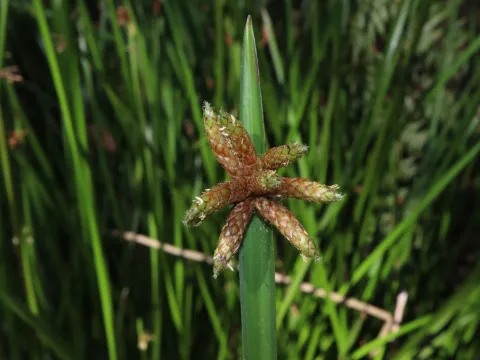
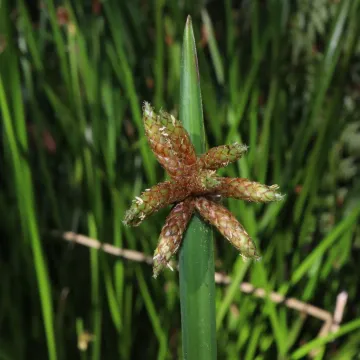
Bog bulrush (lat. Schoenoplectiella mucronata) is a perennial herbaceous plant belonging to the Cyperaceae family. It is classified as an aquatic or wetland crop, often utilized in specific agronomic systems where water management and soil stabilization are prioritized.
The species is native to temperate and tropical regions of Eurasia. It is commonly found in wetlands, marshy areas, and often thrives in paddy fields. Its geographical distribution makes it a significant species for regional water-land management and ecological restoration projects.
Botanically, the plant is characterized by a distinctive triangular stem that lacks developed leaves. It produces dense clusters of spikelets on the side of the stem, a key identifying feature. Its strong rhizomatous root system allows it to spread effectively and create dense vegetative mats in shallow water.
In terms of agricultural requirements, the species thrives in water depths ranging from 10 to 30 cm. It prefers muddy, nutrient-rich substrates, such as silt or peat. Successful cultivation requires careful monitoring of the water level to ensure that the root zone remains saturated, as the plant does not tolerate prolonged drought conditions.
- Phytoremediation of wastewater and agricultural runoff.
- Erosion control on riverbanks and pond edges.
- Raw material production for artisanal weaving and basketry.
- Habitat creation for beneficial aquatic fauna.
Common pests include various aquatic insects and mollusks that feed on the soft stem tissue. Diseases are generally minimal but can occur if water quality is poor or if the plants are overcrowded, leading to fungal rot. Proper management practices include pruning and seasonal thinning to maintain healthy stand density.
Photo gallery