Senegalia ataxacantha
Senegalia ataxacantha
Description
Senegalia ataxacantha, commonly known as the flame thorn, is a deciduous woody species belonging to the Fabaceae family. As a versatile plant, it can grow as a large shrub or a scrambling climber, often forming dense, impenetrable thickets in its natural habitat. It has been reclassified from the Acacia genus to Senegalia, reflecting its unique genetic and morphological markers.
The plant is native to tropical and subtropical Africa, ranging from Senegal to South Africa. It thrives in diverse environments, including wooded grasslands, forest margins, and riverine thickets. Its ability to adapt to varying soil types and climates has made it a significant species for local ecosystems and traditional land management practices across the continent.
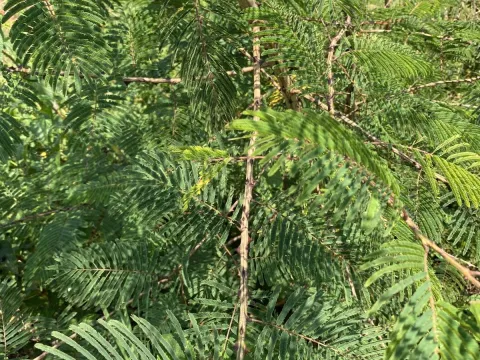
Botanically, it is recognized by its bipinnate leaves and sharp, hooked prickles that aid in climbing. The flowers, appearing in dense, creamy-white cylindrical spikes, provide a significant nectar source. During the blooming season, the shrub often becomes a focal point for pollinators, which is crucial for maintaining the local biodiversity of the surrounding areas.
Regarding cultivation, the plant requires full sun and well-drained soils to reach its full growth potential. It is notably drought-tolerant once established, making it suitable for regions with irregular rainfall patterns. Minimal maintenance is required, though controlled pruning is recommended to manage its aggressive growth habit and prevent the formation of impassable barriers in farming zones.
In agricultural applications, this species is highly valued for its nitrogen-fixing capabilities, which enhance soil fertility and benefit neighboring crops. It is frequently utilized for creating living fences and windbreaks, serving as a biological deterrent against livestock movement. Its wood is also used for fuel and light construction, making it a multifunctional resource for rural communities.
- Excellent drought resistance.
- Nitrogen-fixing root system.
- Effective biological fencing.
- High value for apiculture.
Common pests and diseases include fungal pathogens that manifest during periods of high humidity and various foliage-consuming insects. To maintain healthy stands, it is essential to ensure adequate airflow within the canopy. Regular monitoring for signs of infestation and maintaining appropriate spacing during planting are the primary strategies for managing plant health.
Photo gallery