Senegalia berlandieri
Senegalia berlandieri
Description
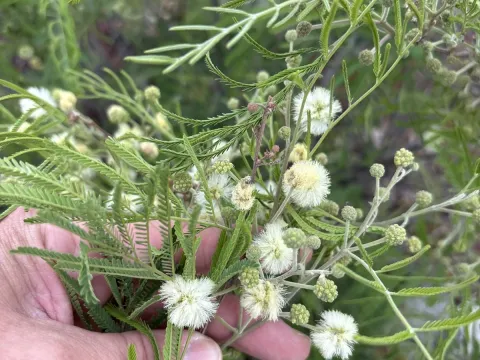
Senegalia berlandieri, commonly known as Guajillo acacia, is a hardy perennial shrub or small tree belonging to the Fabaceae family. It is a highly specialized plant adapted to thrive in harsh, arid, and semi-arid environments where water availability is significantly limited.
The native distribution of this species is centered in the southern United States, particularly Texas, and northern Mexico. It is frequently found on limestone outcrops and rocky slopes, where it serves as a critical component of the local xerophytic plant communities and natural ecosystems.
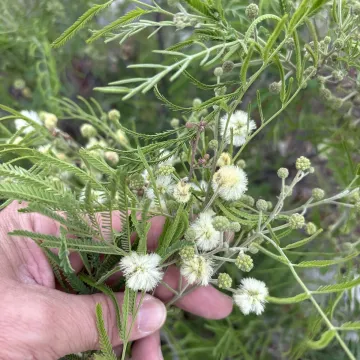
From a botanical standpoint, the plant is characterized by its bipinnate, fern-like foliage and fragrant, white-to-cream spherical flower clusters. As a member of the legume family, it produces characteristic seed pods. Its growth habit is typically multi-stemmed, allowing it to provide significant ground cover in sparse landscapes.
Regarding cultivation requirements, Senegalia berlandieri demands full sun exposure and well-draining, alkaline soils. It is exceptionally drought-tolerant once established and does not require frequent irrigation. However, farmers must avoid waterlogged conditions, as the root system is sensitive to poor drainage and subsequent anaerobic stress.
The agricultural and economic utility of this plant includes its use in erosion control, landscape restoration, and as a natural browse for wildlife and livestock. When managing this crop, growers should be mindful of the following agricultural challenges:
- Susceptibility to specific insect infestations during the active growth phase.
- Risk of fungal infections in the root zone if soil drainage is compromised.
- The presence of alkaloids in the leaves, which necessitates careful monitoring when used as animal forage.
Photo gallery