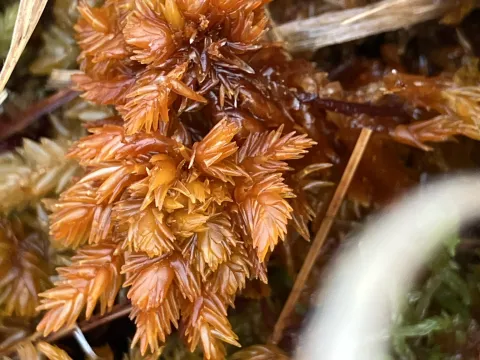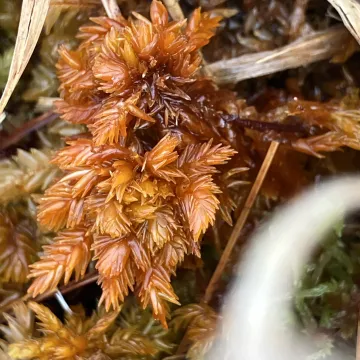
Compact sphagnum
Sphagnum compactum
Description
Compact sphagnum (Sphagnum compactum) is a prominent species within the Sphagnaceae family, known for its dense, cushion-like growth habit. Unlike many loose-growing peat mosses, this species forms firm mats, which makes it a distinctive and highly resilient organism in its natural habitat. It is a perennial bryophyte that plays a fundamental role in peatland ecosystem function and moisture retention.
The plant is native to temperate and arctic regions across the Northern Hemisphere. It thrives primarily in oligotrophic bogs, heathlands, and damp sandy areas. Its geographical distribution is closely tied to areas with high atmospheric humidity, consistent rainfall, and acidic soils, where it often forms significant ground cover in nutrient-poor environments where vascular plants struggle to establish.
Botanically, Sphagnum compactum is characterized by short stems and densely clustered branches. A defining feature is its specialized structure containing large hyaline cells, which function as water-storage reservoirs. These cells allow the moss to absorb and hold large quantities of moisture, essentially acting as a biological sponge that regulates the water content of the surrounding substrate.
Cultivation requirements for this species are specific: it mandates an acidic environment with a pH between 3.0 and 4.5. The moss requires consistent irrigation with low-mineral water to avoid salt accumulation, which can be fatal to the moss. Unlike conventional crops, Sphagnum compactum does not require nitrogen fertilizers; in fact, enrichment with nutrients usually promotes competing vegetation that displaces the moss.
In terms of economic and practical utility, compact sphagnum is highly valued in the horticultural industry. It is extensively used as a substrate component for epiphytic plants, terrariums, and as a protective medium for shipping roots and cuttings due to its natural antiseptic and antifungal properties. Its ability to retain water while maintaining good aeration makes it an ideal medium for moisture-sensitive plant species.
- Exceptional water-holding capacity.
- Naturally acidic and antiseptic properties.
- Low nutrient requirements for survival.
- Significant decorative and functional use in horticulture.
Photo gallery