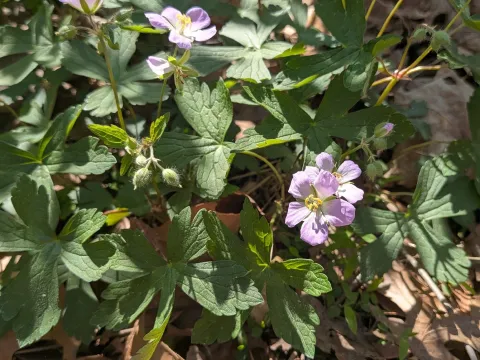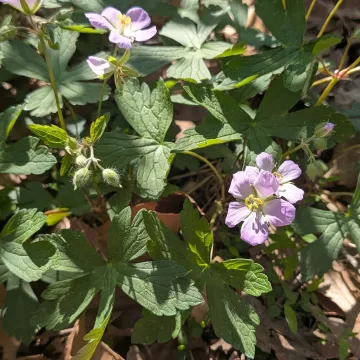
Spotted geranium
Geranium maculatum L.
Description
Spotted geranium (Geranium maculatum L.) is a perennial herbaceous plant belonging to the Geraniaceae family. Native to the woodlands of North America, it has gained attention as a valuable agricultural and horticultural crop. This plant is prized not only for its ornamental foliage and delicate blossoms but also for its medicinal potential in specific biological applications.
The morphology of this plant features a robust, fleshy rhizome and upright stems that typically range from 30 to 60 centimeters in height. Its foliage is palmate and deeply cleft, often displaying distinctive lighter patches. The flowers, which appear in late spring and early summer, exhibit five petals and range in color from soft pink to deep lavender, making it a standout feature in any landscape.
To ensure optimal growth, spotted geranium requires environments that mimic its natural woodland habitat. It thrives in partial shade and prefers soil that is rich in organic matter, consistently moist, yet well-drained. Agronomic practices should focus on maintaining soil pH levels between 6.0 and 7.5, ensuring adequate moisture during the establishment phase, and applying a layer of mulch to maintain root coolness.
Commercially, this crop is utilized as an ornamental ground cover due to its ability to form dense colonies that suppress weed growth. Furthermore, in the field of ethnobotany and herbal production, its rhizomes are harvested for their high concentration of tannins. These compounds are historically used for their astringent and anti-inflammatory properties, providing a niche market for specialized plant-based pharmaceutical production.
Effective pest and disease management is critical to the longevity of the stand. The most common issues include:
- Powdery mildew which manifests during humid, stagnant conditions.
- Leaf spot caused by various fungal pathogens in wet springs.
- Aphids that target tender foliage and buds during the active growing season.
- Root rot resulting from poor soil aeration and drainage.
By implementing a proactive rotation strategy and ensuring sufficient air circulation between plants, growers can significantly reduce the pressure from these biotic stressors. Regular monitoring and sanitation remain the cornerstones of successful geranium cultivation.
Photo gallery