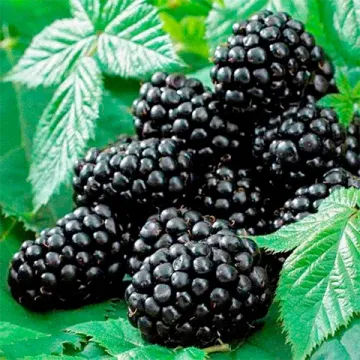
OUACHITA
The Board of Trustees of the University o
Blackberry
0
0
·
55
7 offers
390 €за 1000 шт
Купить

Blackberry rust, caused by the fungus Phragmidium violaceum, is a serious infectious disease affecting plants of the Rosaceae family. This pathogen belongs to the rust fungi group and attacks both wild and cultivated blackberries, as well as some varieties of red raspberry, significantly reducing the productivity of berry plantations.
The primary symptoms of the disease include distinct spots on the upper side of the leaves, which gradually develop a purple or brownish hue. As the fungus progresses, characteristic pustules form on the underside of the leaf; these spore masses appear bright orange or yellow, serving as the most reliable diagnostic sign of the infection.
The development of the pathogen is favored by conditions of high humidity and moderately warm temperatures. The fungus spreads via spores transported by wind or water splashes, particularly during prolonged rainy periods or under excessive overhead irrigation, which creates an ideal environment for spore germination on the plant's surface.
The economic damage caused by rust stems from premature leaf drop, which leaves the plant severely weakened before the onset of winter. Because photosynthesis is disrupted, the bushes lack the energy required for fruit bud formation, leading to a sharp decline in yields, smaller berry size, and lower overall plant vigor.
Integrated pest management includes both cultural and chemical control measures. It is essential to maintain proper spacing, promptly prune and destroy infected canes, and clear away fallen foliage. For control and prevention, copper-based fungicides or systemic chemical treatments approved for berry crops are recommended throughout the growing season.
No discussions yet — be the first.