
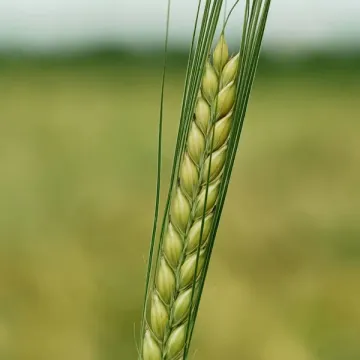
Description
Crown rust is one of the most serious fungal diseases affecting oats, caused by the specialized pathogen Puccinia coronata. The disease belongs to the rust group and is characterized by the presence of specific appendages at the apex of urediniospores, which resemble a crown under a microscope, giving the pathogen its common name.
The primary host of this fungus is various oat species, although the infection can also affect other cereal grasses. The alternate host for the pathogen is buckthorn (Rhamnus), where the sexual cycle of the fungus takes place, contributing to the accumulation of inoculum in the environment.
Symptoms appear primarily on leaves and leaf sheaths as small, powdery, orange-yellow pustules. Over time, as the fungus matures, the pustules turn dark, almost black, indicating the formation of teliospores. Severe infection leads to premature drying of the leaf blades.
The development of epiphytotics is favored by warm, humid weather, the presence of leaf moisture, and moderately high air temperatures. The disease spreads rapidly in oat fields during the grain-filling stage, especially with excessive nitrogen fertilization, which promotes lush vegetative growth that becomes more susceptible to infection.
The economic impact of the disease lies in the disruption of photosynthesis, leading to a sharp decline in yields and grain quality. Yield losses can reach 30–50% or more in years with weather conditions favorable to the pathogen. Furthermore, the thousand-grain weight and test weight are reduced, making the produce unsuitable for seed purposes.
The system of protection includes planting resistant varieties, crop rotation, and spatial isolation from buckthorn shrubs. An important element is the timely application of fungicides upon the first signs of the disease, as well as the destruction of weeds that can serve as reservoirs for the infection.
Контент-граф
Connections · Crown rust
Most often together:
Marketplace
Products · 3

Community
Discussion
No discussions yet — be the first.