


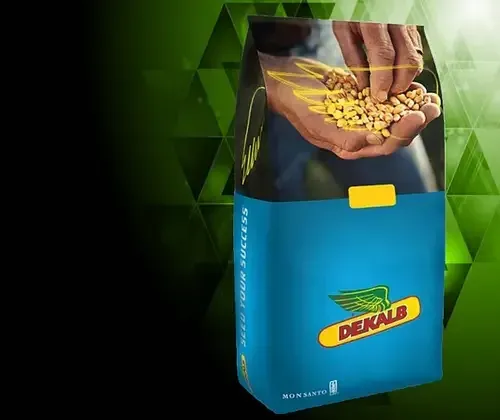

SKU #31519
·
48 views
23M
Corn
MONSANTOUser rating
0 votes0% positive reviews
No ratings yet — be the first.
FAO
90–1240
Hybrid Type
Variety (population)
Kernel Type
Dent
Use Direction
Grain
Prices in stores
from0.3 €per 1000 pcs
5 offers from 5 stores
About product

Reliable dent-grain hybrid designed for consistent grain production with exceptional resistance to Fusarium.
FAO
90–1240
Hybrid Type
Variety (population)
Kernel Type
Dent
Use Direction
Grain
Description
Performance and Reliability: Monsanto 23M Hybrid
The 23M corn hybrid by Monsanto stands as a testament to precision breeding, specifically engineered for commercial grain production. With a versatile FAO range of 90–1240, this hybrid exhibits remarkable physiological plasticity, allowing it to adapt to varying climatic conditions, making it a reliable choice for large-scale farming operations dealing with moisture fluctuations.
The Advantage of Dent Grain
The core strength of the 23M model lies in its dent grain structure. This morphological trait is optimized for superior dry-down rates as the crop reaches maturity. For agribusinesses where energy costs during grain drying are a significant operational expense, the 23M offers a direct pathway to improved cost-efficiency at harvest.
Advanced Pathogen Resistance
Monsanto has integrated a robust genetic defense system into the 23M to combat common corn pathogens. Its high level of resistance to Fusarium (corn fusariosis) is particularly noteworthy, acting as a crucial barrier against grain quality degradation during humid harvest seasons. Additionally, the hybrid shows strong resilience against Helminthosporium, allowing for a reduced dependence on intensive fungicide applications.
Seeding Density Guidelines
To maximize the yield potential of the 23M, accurate planting density is vital. Depending on field conditions and management practices, the following rates are recommended:
- 70,000–75,000 seeds/ha: Ideal for regions with restricted or unpredictable water availability.
- 75,000–80,000 seeds/ha: Standard density for optimized intensive farming systems.
- 80,000–85,000 seeds/ha: High-performance potential for fertile soils with excellent nutrient management.
While the 23M is a high-tech product, it requires a balanced approach to soil fertility. It may show sensitivity during early growth stages under severe environmental stress, so meticulous seedbed preparation and strict adherence to crop rotation are essential for achieving consistent performance.
Crop & resistance
Disease resistance
Specifications hover over for a hint about the specification
|
FAO
FAO
Corn hybrids are classified by maturity groups and by the FAO number. All corn hybrids are distributed according to the FAO scale. Under Central European conditions, a difference of 10 FAO units between hybrids results in a 1-2 day difference in their maturity. The higher the FAO... |
90–1240 |
|---|---|
| Hybrid Type | |
|
Kernel Type
Kernel Type
Dent corn (Zea mays indentata) — Large, elongated, flat kernels. The endosperm is horny on the sides of the kernel, mealy in the center and at the top. A depression forms at the top of the kernel upon ripening. Dent corn is the most widely cultivated group among others. Plants ty... |
|
|
Use Direction
Use Direction
Dual-purpose hybrids: for silage and grain in all growing regions. These are "stay-green" type hybrids, meaning the plants remain green for a longer period. However, this does not affect the sugar, cellulose, and hemicellulose content, nor the degree of lignification of the plant... |
|
|
Recommended Density
Recommended Density
Optimal productivity is achieved at a planting density of 4000-5500 plants/ha. Possible planting scheme: 300-500x40-80 cm. |
70-75 thousand pcs/ha, 75-80 thousand pcs/ha, 80-85 thousand pcs/ha |
| Catalog | Catalog → Corn |
| Manufacturer | MONSANTO |
| Country | USA |
Store offers · 5 from 5 stores
Prices are updated on loadLoading offers…
Aggregator catalog: prices are collected automatically from store websites, normalized by AI and converted at the current exchange rate. Before ordering, confirm the price and availability on the store's website. This block is not indexed by search engines — the data is loaded after the page opens.
See also
Often considered together with this variety


Recently viewed
Similar items in this catalog section







Comments · 0