


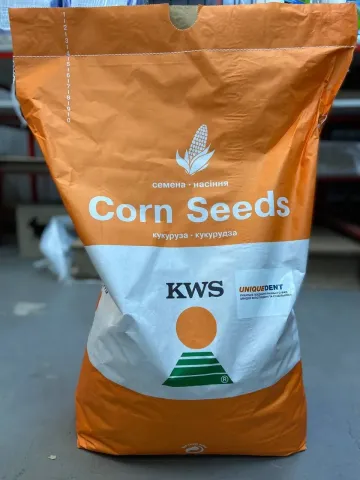

SKU #31566
·
64 views
AMAROC
Corn
KWSUser rating
1 vote100% positive reviews
No ratings yet — be the first.
FAO
90–1240
Ripening
120-140 days
Hybrid Type
Simple Hybrid
Kernel Type
Flint-dent
Prices in stores
from1.8 €per 1000 pcs
7 offers from 7 stores
About product

A versatile flint-dent hybrid combining disease resistance with high yield potential for both grain and silage.
FAO
90–1240
Ripening
120-140 days
Hybrid Type
Simple Hybrid
Kernel Type
Flint-dent
Description
Genetic Potential and Adaptability
The «Amaros» hybrid by KWS is the result of breeding focused on maximum adaptability to temperate climate conditions. With an FAO rating of 90–1240 and a maturity period of 120–140 days, this hybrid demonstrates balanced development of vegetative mass and generative organs. The FAO index in this range indicates the versatility of «Amaros», suitable for both high-quality grain production and high-nutrition silage, making it a flexible solution for diversified farming operations.
Grain Morphology and Technological Properties
The flint-dent grain type is a key technological feature of this hybrid. This combination ensures high starch density (from the flint type) and excellent moisture release during maturation (a benefit of the dent type). In practice, this simplifies the drying process and reduces post-harvest processing costs. The grain exhibits high test weight, which is critical when supplying to processing plants.
Phytosanitary Barrier
KWS breeders have prioritized the genetic defense of «Amaros» against the most aggressive pathogens. The hybrid possesses expressed resistance to:
- Common smut (Ustilago maydis) — a critical factor in regions with high humidity.
- Helminthosporium leaf blight (Helminthosporium spp.), which prevents premature desiccation of the foliage and ensures the preservation of the photosynthetic surface until physiological maturity.
- Fusarium and onion stalk smut, minimizing yield loss risks even under stress conditions.
These parameters allow for a reduction in pesticide load by limiting the need for multiple fungicide treatments while maintaining crop health.
Practical Insights for Agronomists
Utilizing «Amaros» is recommended for farms requiring predictable results under varying harvest timelines. Being a simple hybrid, it ensures high plant uniformity, which facilitates combine harvester calibration and increases field operational efficiency. Stable yields combined with high resistance to a complex of diseases make this hybrid a cornerstone for reliable crop rotation planning.
Crop & resistance
Disease resistance
Specifications hover over for a hint about the specification
|
FAO
FAO
Corn hybrids are classified by maturity groups and by the FAO number. All corn hybrids are distributed according to the FAO scale. Under Central European conditions, a difference of 10 FAO units between hybrids results in a 1-2 day difference in their maturity. The higher the FAO... |
90–1240 |
|---|---|
| Ripening | 120-140 days |
| Hybrid Type | |
|
Kernel Type
Kernel Type
Dent corn (Zea mays indentata) — Large, elongated, flat kernels. The endosperm is horny on the sides of the kernel, mealy in the center and at the top. A depression forms at the top of the kernel upon ripening. Dent corn is the most widely cultivated group among others. Plants ty... |
|
|
Use Direction
Use Direction
Dual-purpose hybrids: for silage and grain in all growing regions. These are "stay-green" type hybrids, meaning the plants remain green for a longer period. However, this does not affect the sugar, cellulose, and hemicellulose content, nor the degree of lignification of the plant... |
|
| Catalog | Catalog → Corn |
| Manufacturer | KWS |
| Country | Germany |
Store offers · 7 from 7 stores
Prices are updated on loadLoading offers…
Aggregator catalog: prices are collected automatically from store websites, normalized by AI and converted at the current exchange rate. Before ordering, confirm the price and availability on the store's website. This block is not indexed by search engines — the data is loaded after the page opens.
See also
Often considered together with this variety


Recently viewed
Similar items in this catalog section






Comments · 0