


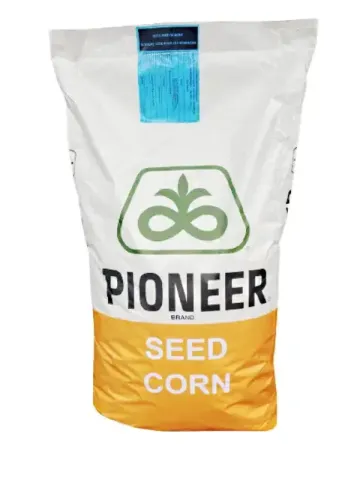
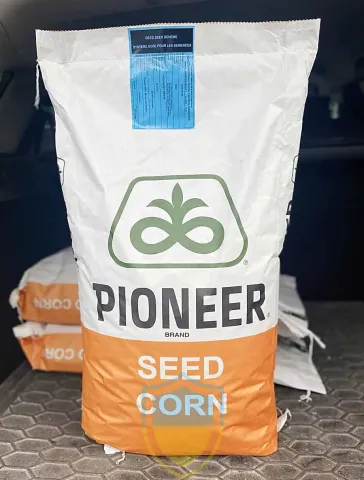


SKU #32701
·
37 views
P9300
Corn
PIONEER s.a.User rating
0 votes0% positive reviews
No ratings yet — be the first.
FAO
90–1240
Ripening
120-140 days
Hybrid Type
Simple Hybrid
Kernel Type
Dent
Prices in stores
from0.8 €per 1000 pcs
5 offers from 5 stores
About product

A reliable, high-performance dent corn hybrid known for its stability and disease resistance.
FAO
90–1240
Ripening
120-140 days
Hybrid Type
Simple Hybrid
Kernel Type
Dent
Description
Growing P9300: Practical insights on the field
Working with Pioneer s.a. hybrids usually means high predictability, and the P9300 is a classic example of this. In my experience, this dent corn hybrid is a real workhorse for those focused on grain production. The maturation cycle of 120–140 days requires careful harvest planning, but the quality of the yield, especially in well-managed fields, makes the effort worthwhile.
Planting density and field management
Success with P9300 starts with the seeding rate. I typically maintain a density of 60,000–65,000 plants per hectare in drier regions, increasing to 65,000–70,000 plants per hectare in areas with better moisture retention. The simple hybrid structure ensures uniform development, and the plants stay upright throughout the season, which makes the harvest significantly smoother for our combine operators, with minimal field losses.
Disease resistance and protection
Disease pressure is always a concern, but the P9300 shows excellent resistance to common corn smut. It holds its own against Helminthosporium leaf blight and stalk smut, which saves me money on intensive fungicide applications. Of course, regular monitoring is necessary, but this hybrid provides a solid defense foundation that lowers overall production risks.
- Grain Type: Dent corn, which is excellent for mechanical harvesting and drying.
- Application: Specifically designed for grain production.
- FAO: The 90–1240 range allows for flexible adaptation to different climatic conditions.
Ultimately, the P9300 is the choice for farmers who prefer consistency over gambling. It is a highly engineered product from Pioneer s.a. that delivers a reliable, high-tonnage yield when you follow the recommended cultivation practices.
Crop & resistance
Disease resistance
Specifications hover over for a hint about the specification
|
FAO
FAO
Corn hybrids are classified by maturity groups and by the FAO number. All corn hybrids are distributed according to the FAO scale. Under Central European conditions, a difference of 10 FAO units between hybrids results in a 1-2 day difference in their maturity. The higher the FAO... |
90–1240 |
|---|---|
| Ripening | 120-140 days |
| Hybrid Type | |
|
Kernel Type
Kernel Type
Dent corn (Zea mays indentata) — Large, elongated, flat kernels. The endosperm is horny on the sides of the kernel, mealy in the center and at the top. A depression forms at the top of the kernel upon ripening. Dent corn is the most widely cultivated group among others. Plants ty... |
|
|
Use Direction
Use Direction
Dual-purpose hybrids: for silage and grain in all growing regions. These are "stay-green" type hybrids, meaning the plants remain green for a longer period. However, this does not affect the sugar, cellulose, and hemicellulose content, nor the degree of lignification of the plant... |
|
|
Recommended Density
Recommended Density
Optimal productivity is achieved at a planting density of 4000-5500 plants/ha. Possible planting scheme: 300-500x40-80 cm. |
60-65 thousand pcs/ha, 65-70 thousand pcs/ha |
| Catalog | Catalog → Corn |
| Manufacturer | PIONEER s.a. |
| Country | USA |
Store offers · 5 from 5 stores
Prices are updated on loadLoading offers…
Aggregator catalog: prices are collected automatically from store websites, normalized by AI and converted at the current exchange rate. Before ordering, confirm the price and availability on the store's website. This block is not indexed by search engines — the data is loaded after the page opens.
See also
Often considered together with this variety


Recently viewed
Similar items in this catalog section







Comments · 0