
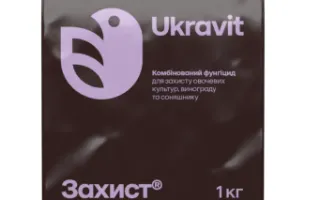

SKU #27262
·
58 views
Title 50
Fungicides
DuPontUser rating
0 votes0% positive reviews
No ratings yet — be the first.
Type of Action
Contact fungicide, Systemic fungicide
Form of the preparation
Water dispersible granules
Drug Consumption
From 0.5 - 1.0 L/ha, More than 4.0 L/ha
Maximum number of treatments
4, 3
About product

A robust dual-component fungicide offering both systemic and contact protection against key crop diseases.
Type of Action
Contact fungicide, Systemic fungicide
Form of the preparation
Water dispersible granules
Drug Consumption
From 0.5 - 1.0 L/ha, More than 4.0 L/ha
Maximum number of treatments
4, 3
Description
Reliable crop protection: Field experience with Title 50
When it comes to fighting late blight and early blight, agronomists have very little room for error. My experience with the Title 50 fungicide from DuPont shows that it is a practical, no-nonsense tool for those who aren't willing to gamble with their soybean, potato, or vineyard yields. The combination of cymoxanil and famoxadone provides that "heavy-hitting" effect required during periods of high infection pressure.
Performance and application insights
The core value of this product lies in its dual mode of action: both systemic and contact. It doesn't just wash off with the first rain; it anchors itself within the plant tissues, creating a durable protective barrier. This is critical, especially when working in vineyards or potato fields where disease spreads rapidly.
- Pathogen control: It performs exceptionally well against downy mildew, peronosporosis, and alternaria. If spotted early, Title 50 stops the disease development almost in its tracks.
- Dosage flexibility: A range of 0.5 to 1.0 L/ha (depending on the crop and severity of the infection) allows for cost optimization, ensuring you aren't overspending on chemicals where it isn't necessary.
- Ease of handling: The water-dispersible granule formulation is a major plus. They don't create dust when poured into the tank, they dissolve quickly, and they don't clog sprayer nozzles, which significantly saves time during field operations.
Operational recommendations
From an operator's perspective, it is crucial to follow the label: the maximum number of treatments ranges from 3 to 4 per season. This is more than enough to cover the crop's critical growth stages. While it falls under hazard class 3, requiring standard personal protective equipment, the product remains highly predictable in use. The main requirement is to ensure uniform leaf coverage, as the contact component relies on thorough application.
For agricultural operations focusing on high-yield potato varieties or commercial sunflowers, this fungicide acts as a genuine insurance policy. It delivers stable results across various soil types, and its systemic capability is forgiving when minor coverage gaps occur in denser parts of the canopy.
Composition
Active ingredients
- Cymoxanil гербицид
- Famoxadone фунгицид Ацетамиды и производные оксазолидина
Application
Used on crops
Against diseases
Specifications hover over for a hint about the specification
|
Type of Action
Type of Action
Insecticides are divided into contact, systemic, stomach, and fumigants based on their mode of entry into the organism. Contact insecticides affect insects upon contact with any part of their body, penetrating into their organism through the integument. They are used against pest... |
|
|---|---|
| Form of the preparation | |
|
Drug Consumption
Drug Consumption
Mass of the preparation per unit of treated area. It is customary to express the dosage rate in kilograms per hectare. The dosage rate is most often given in terms of 100% active ingredient, although sometimes it is calculated based on the preparation in the form of application w... |
From 0.5 - 1.0 L/ha, More than 4.0 L/ha |
|
Maximum number of treatments
Maximum number of treatments
Maximum recommended number of treatments per vegetation period. |
4, 3 |
| Danger Class | 3 |
| Catalog | Catalog → Fungicides |
| Manufacturer | DuPont |
| Country | USA |
Store offers · 4 from 4 stores
Prices are updated on loadLoading offers…
Aggregator catalog: prices are collected automatically from store websites, normalized by AI and converted at the current exchange rate. Before ordering, confirm the price and availability on the store's website. This block is not indexed by search engines — the data is loaded after the page opens.
Alternatives
Soybean · similar varieties




See also
Often considered together with this variety


Recently viewed
Similar items in this catalog section


TMTD
ЗАТ Фірма Август, Росія.,селище Вурнари,
From your browsing history
06.3K 11 offers
3.6 €за 1 л ≈ 184 ₴


Comments · 0