

SKU #25390
·
47 views
Agrisan
Insecticides, Acaricides
RangoliUser rating
0 votes0% positive reviews
No ratings yet — be the first.
Method of Application
Seed Treatment
Form of the preparation
Seed Treatment Emulsion
Drug Consumption
> 2.0 - 3.0 L/T
Maximum number of treatments
1
About product
A systemic seed treatment that prevents crop loss and ensures uniform germination by controlling soil pests.
Method of Application
Seed Treatment
Form of the preparation
Seed Treatment Emulsion
Drug Consumption
> 2.0 - 3.0 L/T
Maximum number of treatments
1
Description
Ensuring Vigorous Crop Establishment
The success of a season often depends on the very first days after sowing. To prevent yield losses caused by soil pests, the insecticide seed treatment «Agrisan» by «Rangoli» offers a robust systemic solution. By utilizing thiamethoxam, it creates a protective shield that guards the seed and the emerging seedling during their most vulnerable stage of development.
Practical Scenarios for Field Application
Farmers rely on «Agrisan» primarily for treating seeds of sunflower, corn, and fodder beet. Its systemic action makes it an essential tool for:
- Soil Pest Management: Effective control of wireworms, which are among the most persistent threats to row crops.
- Early-Stage Protection: Controlling pests like weevils, cereal leaf beetles, and tortoise beetles that can decimate young plants overnight.
- Sap-Feeding Pests: Thanks to its systemic properties, the active ingredient translocates into the growing tissues, protecting the plant against aphids and other insects even before the first foliar applications.
Technical Implementation and Best Practices
«Agrisan» comes in the form of an emulsion designed for seed treatment, ensuring excellent adhesion and uniform coverage of each kernel. The recommended dosage rate is 2.0 to 3.0 liters per ton. This volume ensures that the active substance is sufficient to maintain the protection period required for successful emergence.
Because it is a systemic product with a Class 2 hazard level, precision during the treatment process is paramount. Since the protocol allows for only one application, the focus must be on high-quality equipment calibration to ensure an even coating. Agronomists choose «Agrisan» when they need a reliable, predictable result: achieving full, healthy stands without the gaps caused by pest pressure. It is a straightforward, effective technology for those who prioritize plant vigor from day one.
Composition
Active ingredients
- Thiamethoxam инсектицид Неоникотиноиды
Application
Used on crops
Against pests
Specifications hover over for a hint about the specification
|
Method of Application
Method of Application
Seed treatment — treatment of seeds before sowing. Soil treatment — application of pesticides to soil, for example, in greenhouses. Seed treatment — a preparation used for pre-sowing treatment of seeds of various crops to protect seedlings from plant diseases and pests. In some c... |
|
|---|---|
| Form of the preparation | |
|
Drug Consumption
Drug Consumption
Mass of the preparation per unit of treated area. It is customary to express the dosage rate in kilograms per hectare. The dosage rate is most often given in terms of 100% active ingredient, although sometimes it is calculated based on the preparation in the form of application w... |
> 2.0 - 3.0 L/T |
|
Maximum number of treatments
Maximum number of treatments
Maximum recommended number of treatments per vegetation period. |
1 |
| Danger Class | 2 |
|
Type of Action
Type of Action
Insecticides are divided into contact, systemic, stomach, and fumigants based on their mode of entry into the organism. Contact insecticides affect insects upon contact with any part of their body, penetrating into their organism through the integument. They are used against pest... |
|
| Catalog | Catalog → Insecticides, Acaricides |
| Manufacturer | Rangoli |
| Country | Ukraine |
Store offers · 1 from 1 stores
Prices are updated on loadLoading offers…
Aggregator catalog: prices are collected automatically from store websites, normalized by AI and converted at the current exchange rate. Before ordering, confirm the price and availability on the store's website. This block is not indexed by search engines — the data is loaded after the page opens.
Alternatives
Fodder beet · similar varieties






See also
Often considered together with this variety


Recently viewed
Similar items in this catalog section


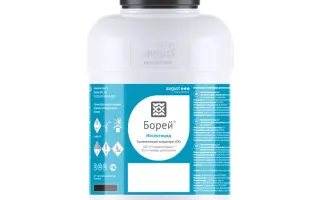
Borey
ЗАТ Фірма Август, Росія.,селище Вурнари,
From your browsing history
27.5K 9 offers
17.6 €за 1 л ≈ 899 ₴


Tabu
ZAT «August-Bel», Republic of Belarus
From your browsing history
45.8K 4 offers
9.8 €за 1 л ≈ 500 ₴



Comments · 0