

SKU #25220
·
30 views
Kinfli
Insecticides, Acaricides
Lissantha, LLCUser rating
0 votes0% positive reviews
No ratings yet — be the first.
Method of Application
Seed Treatment
Drug Consumption
> 0.5 -1.0 l/t, > 2.0 - 3.0 L/T, < 0.5 L/t
Maximum number of treatments
1
Danger Class
3
About product
Reliable systemic seed protection against a complex of pests with flexible dosage options.
Method of Application
Seed Treatment
Drug Consumption
> 0.5 -1.0 l/t, > 2.0 - 3.0 L/T, < 0.5 L/t
Maximum number of treatments
1
Danger Class
3
Description
Initial crop protection: practical insights into «Kinfli»
Successful yield management starts with proper seed treatment. «Kinfli» by Lissanta is a systemic insecticide based on thiamethoxam, which we utilize for pre-sowing seed protection. Its core value lies in its ability to create a "protective shield" around the seed and the young seedling, which is critical during early plantings when soil pests are most aggressive.
Application and Dosage Guidelines
Our practical experience demonstrates that «Kinfli» effectively controls a broad range of threats: from wireworms and cereal ground beetles to aphids, flea beetles, and Colorado potato beetles. As a suspension concentrate, the product is easy to handle; it mixes well, does not clog treatment equipment nozzles, and provides uniform seed coverage. While it is classified as a Hazard Class 3 substance, it remains manageable to work with when proper personal protective equipment is used.
Flexibility in dosage allows us to tailor protection to specific field conditions:
- For low infestation or preventive measures: less than 0.5 L/t.
- Standard protection scheme (the best cost-to-performance balance): 0.5–1.0 L/t.
- In areas with high pest pressure: 2.0–3.0 L/t.
The product is designed for a single application, which is sufficient for robust protection during critical growth stages. The systemic action of thiamethoxam ensures the active ingredient is rapidly absorbed and translocated throughout the plant, providing prolonged resistance against pests.
Operational Tips
In terms of machinery maintenance, using «Kinfli» is hassle-free. The product is stable in tank mixes, making it convenient if you need to combine it with fungicidal seed treatments. The key is ensuring uniform application. This is a case where the quality of seed treatment directly correlates with plant stand density and, ultimately, the harvest results for winter wheat, corn, or potatoes.
Composition
Active ingredients
- Thiamethoxam инсектицид Неоникотиноиды
Application
Used on crops
Specifications hover over for a hint about the specification
|
Method of Application
Method of Application
Seed treatment — treatment of seeds before sowing. Soil treatment — application of pesticides to soil, for example, in greenhouses. Seed treatment — a preparation used for pre-sowing treatment of seeds of various crops to protect seedlings from plant diseases and pests. In some c... |
|
|---|---|
|
Drug Consumption
Drug Consumption
Mass of the preparation per unit of treated area. It is customary to express the dosage rate in kilograms per hectare. The dosage rate is most often given in terms of 100% active ingredient, although sometimes it is calculated based on the preparation in the form of application w... |
> 0.5 -1.0 l/t, > 2.0 - 3.0 L/T, < 0.5 L/t |
|
Maximum number of treatments
Maximum number of treatments
Maximum recommended number of treatments per vegetation period. |
1 |
| Danger Class | 3 |
| Form of the preparation | |
|
Type of Action
Type of Action
Insecticides are divided into contact, systemic, stomach, and fumigants based on their mode of entry into the organism. Contact insecticides affect insects upon contact with any part of their body, penetrating into their organism through the integument. They are used against pest... |
|
| Catalog | Catalog → Insecticides, Acaricides |
| Manufacturer | Lissantha, LLC |
| Country | Russia |
Store offers · 1 from 1 stores
Prices are updated on loadLoading offers…
Aggregator catalog: prices are collected automatically from store websites, normalized by AI and converted at the current exchange rate. Before ordering, confirm the price and availability on the store's website. This block is not indexed by search engines — the data is loaded after the page opens.
Alternatives
Potato · similar varieties


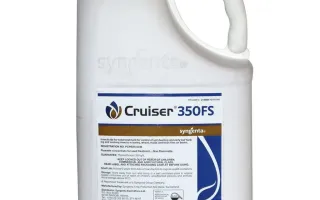


See also
Often considered together with this variety


Recently viewed
Similar items in this catalog section


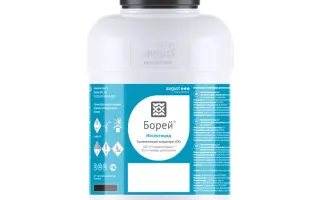
Borey
ЗАТ Фірма Август, Росія.,селище Вурнари,
From your browsing history
27.5K 9 offers
17.6 €за 1 л ≈ 899 ₴


Tabu
ZAT «August-Bel», Republic of Belarus
From your browsing history
45.8K 4 offers
9.8 €за 1 л ≈ 500 ₴



Comments · 0