


SKU #52866
·
35 views
Lakomka
Potato
User rating
0 votes0% positive reviews
No ratings yet — be the first.
Direction
Table Potato
Corm; shape
Round
Corm; skin color
Yellow
Corm; skin structure
Smooth
About product

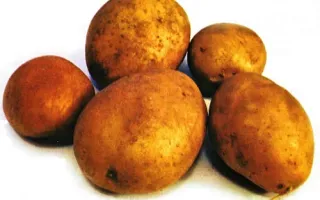
Potato variety LAKOMKA is a medium-early table-type population variety with large round tubers covered by smooth yellow skin with superficial eyes. The flesh has a yellowish hue and is characterized by high starch content (15.2–19.9%) and dry matter, ensuring good cooking properties without loss of shape or color change. The marketable tuber weight ranges from 76 to 112 grams, and the marketabilit…
Direction
Table Potato
Corm; shape
Round
Corm; skin color
Yellow
Corm; skin structure
Smooth
Description
Potato variety LAKOMKA is a medium-early table-type population variety with large round tubers covered by smooth yellow skin with superficial eyes. The flesh has a yellowish hue and is characterized by high starch content (15.2–19.9%) and dry matter, ensuring good cooking properties without loss of shape or color change. The marketable tuber weight ranges from 76 to 112 grams, and the marketability reaches 84–94%, making this variety attractive to consumers and processors.
The plant is of medium height with spreading light-green leaves and white flowers. The yield of variety LAKOMKA is high and stable: the marketable yield ranges from 170 to 334 centners per hectare, which is 47 centners higher than the standard variety Nevsky, and the maximum yield reaches 369 centners per hectare. The variety has good storability (95%), allowing tubers to be stored for a long time without quality loss.
LAKOMKA exhibits comprehensive resistance to potato diseases, including resistance to potato cancer pathogen, although it is susceptible to golden potato cyst nematode and moderately susceptible to late blight on tubers and foliage. It is recommended to grow from seed material to obtain healthy tubers free from viral, bacterial, and fungal diseases. The variety is suitable for seedling cultivation and intended for both garden plots and small farms.
The plant is of medium height with spreading light-green leaves and white flowers. The yield of variety LAKOMKA is high and stable: the marketable yield ranges from 170 to 334 centners per hectare, which is 47 centners higher than the standard variety Nevsky, and the maximum yield reaches 369 centners per hectare. The variety has good storability (95%), allowing tubers to be stored for a long time without quality loss.
LAKOMKA exhibits comprehensive resistance to potato diseases, including resistance to potato cancer pathogen, although it is susceptible to golden potato cyst nematode and moderately susceptible to late blight on tubers and foliage. It is recommended to grow from seed material to obtain healthy tubers free from viral, bacterial, and fungal diseases. The variety is suitable for seedling cultivation and intended for both garden plots and small farms.
Crop & resistance
Disease resistance
Specifications hover over for a hint about the specification
|
Direction
Direction
Existing varieties and types of cabbage are grown for fresh consumption, long-term storage, and technical processing. |
|
|---|---|
| Corm; shape | |
| Corm; skin color | |
| Corm; skin structure | |
| Cormorant; eye depth | |
| Corm; mass | 50-130 grams |
| Starch Content | 15-16%, 16-17%, 17-18%, 18-19% |
| Catalog | Catalog → Potato |
| Originator | Federal Research Center of Potato named after A.G. Lorch |
| Originator | Фгбну Федеральный Исследовательский Центр Картофеля Имени А.Г. Лорха |
| Country | Russia |
Store offers · 2 from 2 stores
Prices are updated on loadLoading offers…
Aggregator catalog: prices are collected automatically from store websites, normalized by AI and converted at the current exchange rate. Before ordering, confirm the price and availability on the store's website. This block is not indexed by search engines — the data is loaded after the page opens.
See also
Often considered together with this variety



Recently viewed
Similar items in this catalog section




Comments · 0