



SKU #68907
·
31 views
AMELIA
Rosa
JSC 'NEW HOLLAND'User rating
0 votes0% positive reviews
No ratings yet — be the first.
Growth Type
Shrub (Bush)
Color
Apricot
Flower size, cm
10-15
Bush height, cm
120-200
Prices in stores
from1 571.4 €per 1000 pcs
7 offers from 7 stores
About product

The Amelia (Amelia Renaissance) rose belongs to the shrub group and was bred in 2002 by the Danish Poulsen nursery. This variety combines the characteristics of old-fashioned English roses with modern traits, making it particularly appealing to gardeners. Amelia bushes are branched, upright, reaching heights up to 150 cm and widths of about 100 cm, with sturdy canes and large, glossy dark green fo…
Growth Type
Shrub (Bush)
Color
Apricot
Flower size, cm
10-15
Bush height, cm
120-200
Description
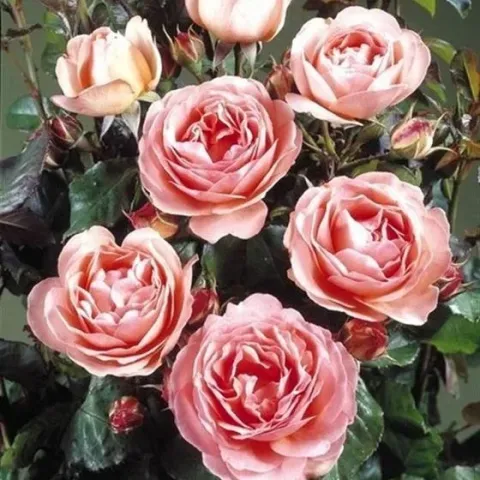
The Amelia (Amelia Renaissance) rose belongs to the shrub group and was bred in 2002 by the Danish Poulsen nursery. This variety combines the characteristics of old-fashioned English roses with modern traits, making it particularly appealing to gardeners. Amelia bushes are branched, upright, reaching heights up to 150 cm and widths of about 100 cm, with sturdy canes and large, glossy dark green foliage that contrasts strikingly with the bright flowers.
The rose flowers are large, bowl-shaped, up to 12 cm in diameter, double-flowered, and consist of 25-40 petals. Their color changes during the blooming period—from coral-pink to a tender apricot shade, giving the plant a "chameleon" effect. Flowers appear both singly and in small clusters of 2-3, lasting on the bush for at least ten days and emitting a rich, pleasant aroma. The rose blooms profusely starting in early summer and can rebloom throughout the season, delighting with its ornamental value and fragrance.
Amelia is distinguished by high resistance to diseases and frosts, however, due to the large bush volume, it requires winter protection, which is more labor-intensive compared to hybrid tea roses. This variety is perfect for growing in a garden and looks excellent in bouquets, thanks to its lushness, vivid coloring, and long flowering period.
The rose flowers are large, bowl-shaped, up to 12 cm in diameter, double-flowered, and consist of 25-40 petals. Their color changes during the blooming period—from coral-pink to a tender apricot shade, giving the plant a "chameleon" effect. Flowers appear both singly and in small clusters of 2-3, lasting on the bush for at least ten days and emitting a rich, pleasant aroma. The rose blooms profusely starting in early summer and can rebloom throughout the season, delighting with its ornamental value and fragrance.
Amelia is distinguished by high resistance to diseases and frosts, however, due to the large bush volume, it requires winter protection, which is more labor-intensive compared to hybrid tea roses. This variety is perfect for growing in a garden and looks excellent in bouquets, thanks to its lushness, vivid coloring, and long flowering period.
Video · 9 videos
Suggest a video →Crop & resistance
Disease resistance
Specifications hover over for a hint about the specification
| Growth Type | |
|---|---|
|
Color
Color
The leaf color may vary in light-, dark-, gray-green shades with yellow, red, brown or purple pigmentation. |
|
| Flower size, cm | 10-15 |
| Bush height, cm | 120-200 |
| Bush width, cm | 100+ |
| Flower Shape | |
| Scent | |
| Frost Resistance | |
| Disease Resistance | |
| Blooming Period | All Summer |
| Usage | |
| Catalog | Catalog → Rosa |
| Manufacturer | JSC 'NEW HOLLAND' |
| Originator | JSC 'NEW HOLLAND' |
| Country | Russia |
Store offers · 7 from 7 stores
Prices are updated on loadLoading offers…
Aggregator catalog: prices are collected automatically from store websites, normalized by AI and converted at the current exchange rate. Before ordering, confirm the price and availability on the store's website. This block is not indexed by search engines — the data is loaded after the page opens.
See also
Often considered together with this variety


Recently viewed
Similar items in this catalog section




Comments · 0