


SKU #73509
·
46 views
GORNOLTAISKIY 86
Sedge
FANCAUser rating
0 votes0% positive reviews
No ratings yet — be the first.
Assignment
Feed, Pasture
Usage Type
Hay, Pasture, Silage Feed
About product

Gornoaltaiskiy 86 is a perennial grass of the spring-winter type from the family of grasses, belonging to the species Elymus sibiricus L., known as Siberian brome. The plant is characterized by a tufted root system penetrating to a depth of 120–150 cm, which ensures drought resistance and allows for soil stabilization, especially sandy soils and ravines. Stems are 60 to 120 cm high, dense and mult…
Assignment
Feed, Pasture
Usage Type
Hay, Pasture, Silage Feed
Description
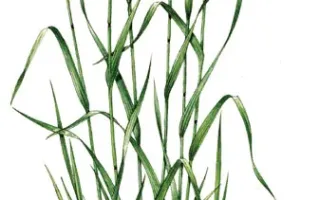
Gornoaltaiskiy 86 is a perennial grass of the spring-winter type from the family of grasses, belonging to the species Elymus sibiricus L., known as Siberian brome. The plant is characterized by a tufted root system penetrating to a depth of 120–150 cm, which ensures drought resistance and allows for soil stabilization, especially sandy soils and ravines. Stems are 60 to 120 cm high, dense and multi-stemmed, well-leafed; leaves are linear, rough, 15–30 cm long and 0.8–1.4 cm wide.
The inflorescence is a loose spike 10 to 25 cm long, containing 13–30 spikelets with 5–7 flowers each. The fruit is an elongated membranous caryopsis of grayish-straw color, 6–22 mm long; one spike contains 50 to 100 grains, and the mass of 1000 grains is 2–5.5 g. The plant is winter-hardy, moisture-loving and not demanding on soils: optimal pH is 6.5–7.5, but the plant withstands a decrease to 5.6. Grows well on loam, loamy sand and sandy soils, as well as on floodplain meadows, dry meadows and mountain slopes.
Gornoaltaiskiy 86 is widely used as hay and silage, to a lesser extent as pasture. High-quality hay can be obtained until flowering; up to three cuts are allowed in summer. Hay yield varies from 3–12 c/ha in Buryatia to 90–140 c/ha in Central Yakutia, and reaches 30–40 c/ha when combined with alfalfa and clover. Seed yield is up to 6–8 c/ha. In Yakutia, the variety is also used as part of lawn grasses. The plant has good resistance to cross- and self-pollination, but is susceptible to diseases.
The inflorescence is a loose spike 10 to 25 cm long, containing 13–30 spikelets with 5–7 flowers each. The fruit is an elongated membranous caryopsis of grayish-straw color, 6–22 mm long; one spike contains 50 to 100 grains, and the mass of 1000 grains is 2–5.5 g. The plant is winter-hardy, moisture-loving and not demanding on soils: optimal pH is 6.5–7.5, but the plant withstands a decrease to 5.6. Grows well on loam, loamy sand and sandy soils, as well as on floodplain meadows, dry meadows and mountain slopes.
Gornoaltaiskiy 86 is widely used as hay and silage, to a lesser extent as pasture. High-quality hay can be obtained until flowering; up to three cuts are allowed in summer. Hay yield varies from 3–12 c/ha in Buryatia to 90–140 c/ha in Central Yakutia, and reaches 30–40 c/ha when combined with alfalfa and clover. Seed yield is up to 6–8 c/ha. In Yakutia, the variety is also used as part of lawn grasses. The plant has good resistance to cross- and self-pollination, but is susceptible to diseases.
Specifications
| Assignment | |
|---|---|
| Usage Type | |
| Catalog | Catalog → Sedge |
| Manufacturer | FANCA |
| Originator | Av Du Capitaine N Tchorere |
| Country | Russia |
Store offers
Prices are updated on loadLoading offers…
Aggregator catalog: prices are collected automatically from store websites, normalized by AI and converted at the current exchange rate. Before ordering, confirm the price and availability on the store's website. This block is not indexed by search engines — the data is loaded after the page opens.
See also
Often considered together with this variety




Comments · 0