


SKU #73510
·
57 views
Mashuk
Sedge
User rating
0 votes0% positive reviews
No ratings yet — be the first.
Assignment
Feed
Vegetation Period
80–100
About product

Mashuk – a perennial loosely-culm grass of the spring-winter type from the Poaceae family, genus Clinelymus (Griseb.) Nevski. The plant is characterized by a dense, multi-stemmed clump up to 60–120 cm in height, with smooth stems and good foliage. The root system is fibrous, penetrating up to 120–150 cm deep, which ensures high drought resistance and winter hardiness.Mashuk leaves are linear, flat…
Assignment
Feed
Vegetation Period
80–100
Description
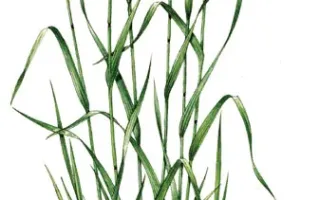
Mashuk – a perennial loosely-culm grass of the spring-winter type from the Poaceae family, genus Clinelymus (Griseb.) Nevski. The plant is characterized by a dense, multi-stemmed clump up to 60–120 cm in height, with smooth stems and good foliage. The root system is fibrous, penetrating up to 120–150 cm deep, which ensures high drought resistance and winter hardiness.
Mashuk leaves are linear, flat, 15–30 cm long, 0.8–1.4 cm wide, and rough on both sides. The inflorescence is a loose spike hanging downwards, 10–25 cm long, containing 13–30 spikelets and 5–7 flowers. The fruit is an elongated glume-grain in a greyish-straw color, 6–22 mm long; one spike contains 50 to 100 seeds, and the mass of 1000 seeds is 2–5.5 g.
Mashuk is widely distributed in all regions of Siberia and the Far East, including Buryatia, Central Asia, and is promising in permafrost zones (Yakutia, Magadan). The plant prefers loam, sandy loam, and sandy soils, as well as floodplain meadows, dry meadows, and mountain slopes. Optimal soil pH is 6.5–7.5, but the plant withstands a drop to 5.6.
The economic significance of Mashuk lies in its use as a hay and silage grass. Hay yield can reach 140 c/ha in Yakutia, and seed yield is 6–8 c/ha. The culture retains productivity for 5–7 years with good care, and up to 10 years under optimal conditions. Mashuk is also used for stabilizing sands and gullies, and as a fodder crop provides high-quality hay (61.3 feed units per 100 kg) and a significant level of digestible protein.
The vegetative period of Mashuk is 94–109 days. The plant is ecologically plastic but unstable to diseases. It hardens quickly upon heading, so mowing should be carried out at the end of stem elongation – the beginning of heading to avoid animal injuries.
Mashuk varieties include Kamalinsky 7, Gurans, Nurbinsky, Gornoaltaysky 86, Mashuk, and Amginsky. These varieties differ in good adaptation to harsh climatic conditions of Siberia and ensure a stable yield in various landscapes.
Mashuk leaves are linear, flat, 15–30 cm long, 0.8–1.4 cm wide, and rough on both sides. The inflorescence is a loose spike hanging downwards, 10–25 cm long, containing 13–30 spikelets and 5–7 flowers. The fruit is an elongated glume-grain in a greyish-straw color, 6–22 mm long; one spike contains 50 to 100 seeds, and the mass of 1000 seeds is 2–5.5 g.
Mashuk is widely distributed in all regions of Siberia and the Far East, including Buryatia, Central Asia, and is promising in permafrost zones (Yakutia, Magadan). The plant prefers loam, sandy loam, and sandy soils, as well as floodplain meadows, dry meadows, and mountain slopes. Optimal soil pH is 6.5–7.5, but the plant withstands a drop to 5.6.
The economic significance of Mashuk lies in its use as a hay and silage grass. Hay yield can reach 140 c/ha in Yakutia, and seed yield is 6–8 c/ha. The culture retains productivity for 5–7 years with good care, and up to 10 years under optimal conditions. Mashuk is also used for stabilizing sands and gullies, and as a fodder crop provides high-quality hay (61.3 feed units per 100 kg) and a significant level of digestible protein.
The vegetative period of Mashuk is 94–109 days. The plant is ecologically plastic but unstable to diseases. It hardens quickly upon heading, so mowing should be carried out at the end of stem elongation – the beginning of heading to avoid animal injuries.
Mashuk varieties include Kamalinsky 7, Gurans, Nurbinsky, Gornoaltaysky 86, Mashuk, and Amginsky. These varieties differ in good adaptation to harsh climatic conditions of Siberia and ensure a stable yield in various landscapes.
Specifications
| Assignment | |
|---|---|
| Vegetation Period | 80–100 |
| Catalog | Catalog → Sedge |
| Originator | Фгбну Федеральный Научный Центр Лубяных Культур |
| Originator | Епифанов Василий Степанович |
| Originator | Савельев Геннадий Демьянович |
| Originator | Маштаков Филипп Михайлович |
| Originator | FGBNU 'FEDERAL'NYJ NAUChNYJ TSENTR LUBYaNYH KUL'TUR' |
| Country | Russia |
Store offers
Prices are updated on loadLoading offers…
Aggregator catalog: prices are collected automatically from store websites, normalized by AI and converted at the current exchange rate. Before ordering, confirm the price and availability on the store's website. This block is not indexed by search engines — the data is loaded after the page opens.
See also
Often considered together with this variety




Comments · 0