


SKU #74623
·
48 views
Natalka
Timofeyevka
User rating
0 votes0% positive reviews
No ratings yet — be the first.
Usage Type
On feed
About product

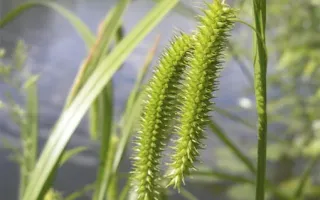
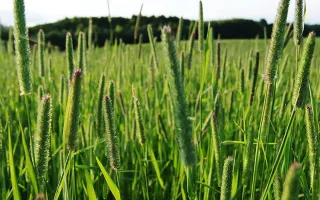
Natalka – a perennial ground grass of the Poaceae family, genus Phleum. The plant is characterized by upright shoots and alternate leaf arrangement along the stem. Leaves are simple, linear, with smooth margins, a wedge-shaped base, and slightly serrated edges; they are covered with a waxy coating, giving them a bluish tint. Inflorescences are spikes (spikes) in which flowers are green with yellow…
Usage Type
On feed
Description
Natalka – a perennial ground grass of the Poaceae family, genus Phleum. The plant is characterized by upright shoots and alternate leaf arrangement along the stem. Leaves are simple, linear, with smooth margins, a wedge-shaped base, and slightly serrated edges; they are covered with a waxy coating, giving them a bluish tint. Inflorescences are spikes (spikes) in which flowers are green with yellow spots, and anthers reach 1 cm. Fruits are dry grains, usually brown and gray.
Natalka is cold-resistant: seeds germinate at temperatures from 1 to 2 °C, and growth begins at 5–6 °C. The plant prefers moist soils but can survive in moderately arid meadows and on clayey soils. It does not tolerate prolonged shading and severe drought, but responds well to fertilization, especially with nitrogen, which increases yield.
In agriculture, natalka is used as a forage grass: its green mass and hay are eaten by animals. Seeds are used for making hay, hay meal, and silage. Planting is usually done in spring (April) or autumn; planting depth – 2 cm. Yield reaches up to 10 t/ha with proper sowing and care. Due to its frost resistance and unpretentiousness to soil conditions, natalka is widely distributed in forest-steppe and steppe zones of the country.
Natalka is cold-resistant: seeds germinate at temperatures from 1 to 2 °C, and growth begins at 5–6 °C. The plant prefers moist soils but can survive in moderately arid meadows and on clayey soils. It does not tolerate prolonged shading and severe drought, but responds well to fertilization, especially with nitrogen, which increases yield.
In agriculture, natalka is used as a forage grass: its green mass and hay are eaten by animals. Seeds are used for making hay, hay meal, and silage. Planting is usually done in spring (April) or autumn; planting depth – 2 cm. Yield reaches up to 10 t/ha with proper sowing and care. Due to its frost resistance and unpretentiousness to soil conditions, natalka is widely distributed in forest-steppe and steppe zones of the country.
Specifications
| Usage Type | |
|---|---|
| Catalog | Catalog → Timofeyevka |
| Originator | Kyivs'ka DS NNC «Institute of Agriculture UA» |
| Country | Ukraine |
Store offers · 1 from 1 stores
Prices are updated on loadLoading offers…
Aggregator catalog: prices are collected automatically from store websites, normalized by AI and converted at the current exchange rate. Before ordering, confirm the price and availability on the store's website. This block is not indexed by search engines — the data is loaded after the page opens.
See also
Often considered together with this variety





Recently viewed
Similar items in this catalog section




Comments · 0