

Description
The wheat stem sawfly (Cephus pygmeus) is a significant agricultural pest belonging to the order Hymenoptera and the family Cephidae. It is a stem-boring insect that targets cereal crops globally, posing a major threat to yield quantity and quality, particularly in wheat-growing regions.
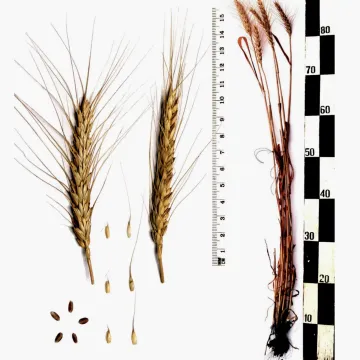
This pest primarily infests common wheat, but it can also be found on barley, rye, and various wild grass species. By attacking the stems of these plants, the sawfly disrupts the plant's ability to transport water and nutrients to the head, significantly impacting crop development during the critical ripening stage.
The insect follows a univoltine life cycle, meaning it completes one generation per year. Larvae overwinter in a silk cocoon inside the plant stubble at or near the soil surface. Pupation occurs in early spring, followed by the emergence of adults, which typically occurs during the heading stage of the host cereals.
The damage caused by the wheat stem sawfly is twofold. First, the larva mines the stem interior, feeding on the pith and weakening the structural integrity of the crop. Second, before pupating, the mature larva cuts a notch around the inner wall of the stem, causing the stalks to lodge or snap off under wind pressure, which makes harvesting extremely difficult.
Effective management requires an integrated approach to minimize population levels. Recommended strategies include:
- Immediate post-harvest stubble destruction to destroy overwintering larvae.
- Deep plowing to bury the infested stubble deeper in the soil.
- Crop rotation to break the pest's life cycle.
- Selection of resistant or early-maturing crop varieties.
- Application of approved insecticides during the adult mating and egg-laying period.
Biology
Taxonomy
- Latin name
- Cephus pygmeus
- Order
- Hymenoptera
- Family
- Cephidae
Taxonomy and Latin: EPPO Global Database · code CEPHPY
Контент-граф
Connections · Wheat stem sawfly
Most often together:
Marketplace
Products · 5


Community
Discussion
No discussions yet — be the first.