Yellow toadflax
Linaria vulgaris
Description
Yellow toadflax (Linaria vulgaris) is a member of the Plantaginaceae family and is classified as a persistent perennial herbaceous weed. It is widely recognized in agronomy as a difficult-to-control species due to its aggressive growth pattern and ability to propagate through both seeds and underground root systems.
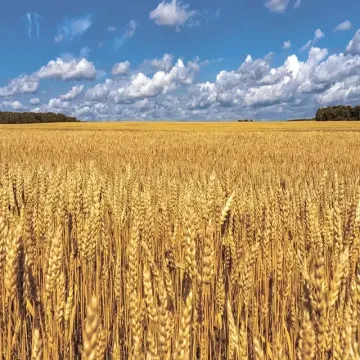
This weed is commonly found in cereal fields, fallow lands, pastures, and along field margins. It thrives particularly well in sandy or light-textured soils where its horizontal root system can spread rapidly, allowing the plant to form dense colonies that compete with crops for essential resources.
The biology of Linaria vulgaris is defined by its extensive root network capable of producing new shoots from adventitious buds. Even small segments of the roots, if severed during tillage, can regenerate into mature plants. A single mature specimen can produce thousands of seeds, which are highly dispersed by wind and water, ensuring long-term persistence in the seed bank.
The economic impact of yellow toadflax is significant, as it acts as a strong competitor for moisture and nutrients. In arable crops, it causes yield reduction through resource depletion and shading. Furthermore, the presence of these weeds can complicate harvesting operations and lower the overall quality and purity of the grain harvest.
Control strategies should be integrated to be successful.
- Deep mechanical tillage helps to exhaust root reserves.
- Summer fallowing is effective in weakening the colonies.
- Systemic herbicide applications are recommended during the rosette or pre-flowering stage for maximum translocation to the root system.
Biology
Taxonomy
- Latin name
- Linaria vulgaris
- Family
- Подорожник большой
Taxonomy and Latin: EPPO Global Database · code LINVU
Контент-граф
Connections · Yellow toadflax
Most often together:
Marketplace