Blessed thistle
Centaurea benedicta (L.) L.
Description
Blessed thistle, scientifically classified as Centaurea benedicta (or Cnicus benedictus), is an annual herbaceous plant belonging to the Asteraceae family. In agriculture, this crop is cultivated primarily as a high-value medicinal herb, noted for its bitter compounds, such as cnicin, which are widely extracted for pharmaceutical use.
The plant originates from the Mediterranean region and has historically spread across Europe and parts of North America. It thrives in temperate climates that offer ample sunshine and well-drained soil. Unlike many ornamental thistles, the Blessed thistle requires specific environmental management to ensure high concentrations of active ingredients in the harvested foliage.
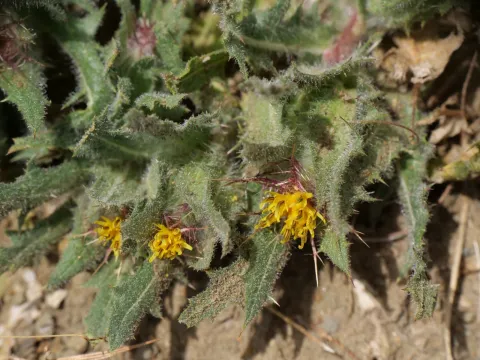
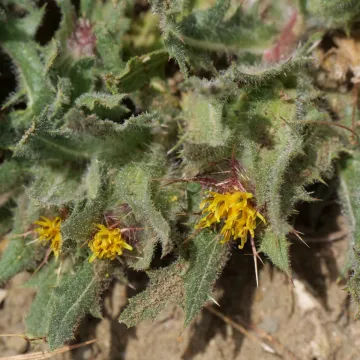
Botanically, the plant features a rosette of lanceolate, hairy leaves and a branched stem that typically reaches up to 60 cm in height. The terminal flowers are bright yellow and enclosed in spiny bracts. This structure makes the plant relatively resilient in wild conditions, but in cultivated settings, it requires careful spacing to ensure proper airflow and light penetration.
Cultivation requirements involve sowing seeds in spring in soil that has reached stable temperatures. The crop performs best on well-drained, sandy loam soils rich in organic matter. Agronomic practices focus on early-stage weed control, as the seedlings are susceptible to competition. Once established, the plant is relatively low-maintenance, requiring minimal supplemental irrigation unless conditions become extremely dry.
The primary economic use is the harvesting of flowering tops for the production of herbal tinctures, bitters, and digestive aids. Regarding plant health, the crop is generally hardy, though it may be susceptible to aphids and fungal pathogens like powdery mildew if plant density is too high or if soil moisture levels are not strictly managed. Proper crop rotation is essential to maintain soil fertility and prevent soil-borne disease buildup.
Photo gallery