Diffuse knapweed
Centaurea diffusa Lam.
Description
Diffuse knapweed (Centaurea diffusa) is a biennial or short-lived perennial herbaceous plant belonging to the Asteraceae family. Within agricultural and ecological contexts, it is widely recognized as a noxious weed that poses a significant threat to rangelands, pastures, and disturbed soil environments.
The native range of this species is centered in the regions of Southeastern Europe and Western Asia. Over the past century, it has become a major invasive species across North America and other parts of the world, where it aggressively colonizes open fields, roadside verges, and overgrazed land due to the lack of natural biological enemies.
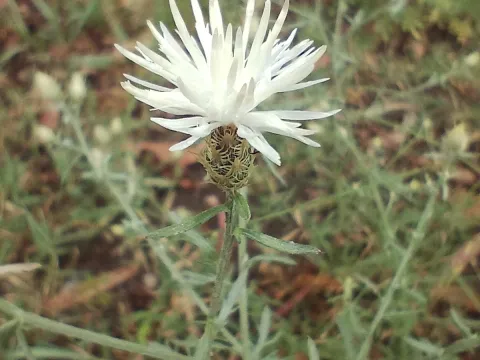
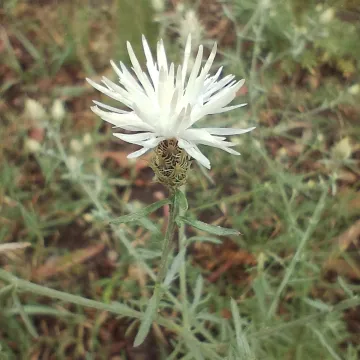
Botanically, the plant develops a rosette of leaves in its first year, followed by a branched flowering stem in the second year. It reaches a height of up to one meter. The stems are characterized by fine, white hairs, and the flowers appear in small, numerous, urn-shaped heads that produce a high volume of viable seeds per individual plant.
Regarding its environmental requirements, diffuse knapweed is remarkably resilient. It thrives in well-drained, semi-arid soils and can tolerate a wide variety of climatic conditions. It is particularly successful in colonizing sites where the native vegetation has been thinned, as it lacks strong competition from other flora in these disturbed habitats.
From an agricultural standpoint, there is no beneficial use for this plant. It is considered detrimental because it reduces forage production, degrades livestock habitat, and can harbor specific pests that affect more valuable crops. Integrated Pest Management (IPM) is essential for control, involving:
- Manual removal of plants before they reach the bolting and seeding stage.
- Strategic application of selective herbicides during the rosette growth phase.
- Utilization of biological control agents, such as seed-head feeding insects.
- Revegetation of infested areas with deep-rooted, competitive perennial grasses.
Photo gallery