Boehmeria tricuspis
Boehmeria tricuspis
Description
Boehmeria tricuspis, commonly known in its native regions as a form of false nettle, is a perennial plant belonging to the Urticaceae family. Unlike some of its relatives, this species is highly valued in agriculture for its stem fibers, which possess remarkable tensile strength and are used as a sustainable alternative to synthetic materials in the textile industry.
The plant originates from East Asia, with a natural range encompassing Japan, China, and the Korean Peninsula. It is typically found in moist, semi-shaded environments such as valley bottoms, woodland edges, and along stream banks. Its cultivation requires specific geographic conditions that mimic its natural habitat, favoring regions with mild winters and humid, temperate summers.
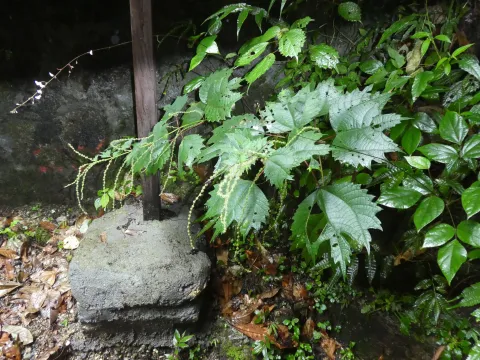
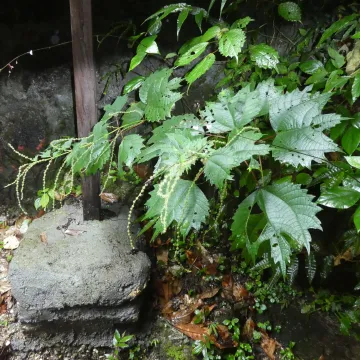
Botanically, Boehmeria tricuspis is characterized by its erect, non-stinging stems that reach heights of up to two meters. The leaves are distinctively three-lobed or three-pointed, giving the plant its specific epithet. It develops a vigorous, spreading rhizome system that allows for rapid regeneration of stems, making it a reliable perennial crop that can be harvested annually over several years.
Successful production relies on deep, fertile, and well-draining loamy soils. The crop performs best when provided with consistent moisture levels and protection from intense, direct solar radiation during the hottest parts of the day. Essential agricultural practices include regular weed management and the application of nitrogen-rich fertilizers, which are vital for achieving the stem height and fiber quality necessary for commercial processing.
Economically, the primary utility of this crop lies in the extraction of high-grade bast fibers, processed for high-strength ropes, specialized paper, and industrial textiles. While generally hardy, the crop can be susceptible to common pests such as aphids or spider mites, and in overly damp conditions, root rot may occur. Careful monitoring and preventative crop rotation are standard strategies to maintain high yields and plant health.
Photo gallery