Welted thistle
Carduus crispus L.
Description
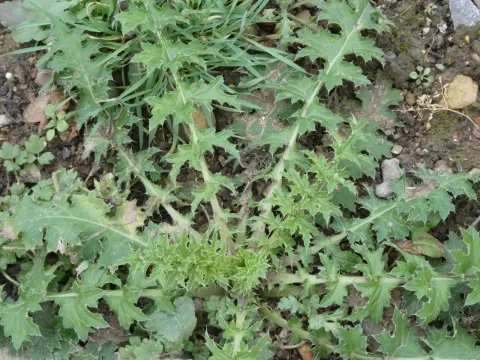
The welted thistle (Carduus crispus L.) is a biennial herbaceous plant belonging to the Asteraceae family. Known for its distinctively prickly, winged stems, it is widely distributed across Europe and Asia, often found in ruderal habitats, field margins, and neglected pastures.
The origin of the species is linked to the temperate zones of Eurasia. It demonstrates a high level of adaptability to diverse environments, thriving in nitrogen-rich soils and open, sunny locations. Due to its vigorous growth, it is often considered a weed in agricultural landscapes but is ecologically important for biodiversity.
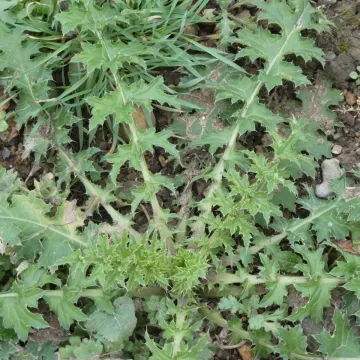
Botanically, Carduus crispus produces a rosette of leaves in its first year, followed by a branching stem that can reach significant heights in the second year. Its flower heads, packed with purple florets, bloom throughout the summer, producing a large number of seeds equipped with pappi for wind dispersal.
In terms of agricultural management, the plant requires consistent monitoring to prevent rapid colonization. Standard control practices involve mechanical removal before flowering, which effectively halts the seed dispersal cycle. It does not require irrigation or fertilizers, as it naturally competes well in nutrient-sufficient disturbed soils.
- Excellent nectar source for pollinators.
- Medicinal properties utilized in traditional herbalism.
- Potential host for specialized insect pests like weevils.
- Susceptible to various fungal pathogens including powdery mildew.
Economically, the plant is valued by beekeepers as a late-summer honey source. In addition to its role in apiculture, scientific interest persists in its chemical composition for potential medicinal applications. While generally treated as a pest in crops, its presence supports beneficial insect populations in the field margins.
Photo gallery