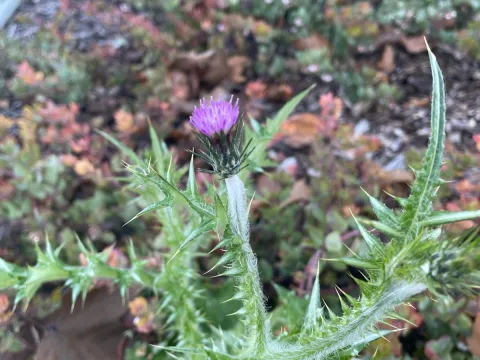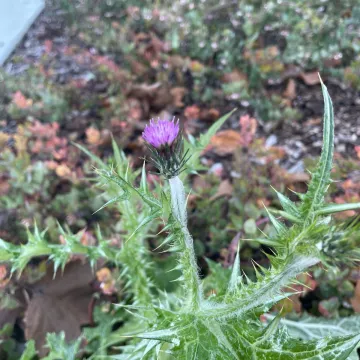
Italian thistle
Carduus pycnocephalus L.
Description
Italian thistle (Latin: Carduus pycnocephalus L.) is a biennial or annual herbaceous plant belonging to the Asteraceae family. It is widely recognized in agriculture as a problematic weed that can significantly impact the productivity of pastures and rangelands by forming dense, impenetrable stands that displace valuable forage species.
Originally native to the Mediterranean region and Western Europe, this plant has spread globally, becoming an invasive threat in parts of Australia, New Zealand, and the United States. Its adaptability allows it to thrive in disturbed areas, such as roadsides, grazing lands, and abandoned fields, where it quickly outcompetes native vegetation.
The morphology of the plant includes a spiny, winged stem that can reach heights of up to two meters. The leaves are deeply lobed and armed with sharp prickles. Its distinct feature is the arrangement of small flower heads clustered in groups of three to nine at the tips of the stems. These heads produce numerous seeds topped with a pappus, which facilitates efficient dispersal via wind over long distances.
In terms of agricultural requirements, this thistle prefers well-drained soils and thrives in Mediterranean-type climates characterized by cool, wet winters and warm, dry summers. It is not overly demanding of soil fertility but flourishes in nutrient-rich conditions. Effective control strategies include mechanical removal before flowering, controlled burning, and the strategic application of herbicides, coupled with maintaining a healthy ground cover to prevent seed germination.
The economic impact is primarily negative, as the spiny nature of the plant restricts animal movement and reduces the usable area of pastures. However, the plant does serve as a source of nectar for pollinators and supports a specific range of insects. Major pests include various species of weevils (like Rhinocyllus conicus), which have been researched for biological control programs to manage thistle populations naturally without the use of excessive chemicals.
Photo gallery