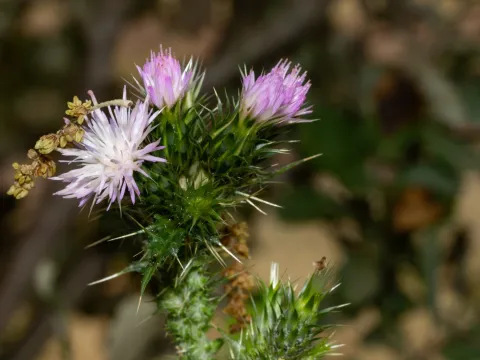
Slender thistle
Carduus tenuiflorus Curtis
Description
The slender thistle (Carduus tenuiflorus Curtis) is a biennial herbaceous plant belonging to the Asteraceae family. Often considered a persistent weed in agricultural settings, it is a significant species in studies regarding rangeland ecology and crop protection due to its competitive nature and rapid spread in grazing areas.
The native range of the species includes Western Europe and the Mediterranean basin. Due to human migration and trade, it has become widely naturalized across various continents, including Australia and North America. It thrives in temperate maritime climates, showing a preference for regions with mild winters and wet springs, which facilitate its vegetative growth.
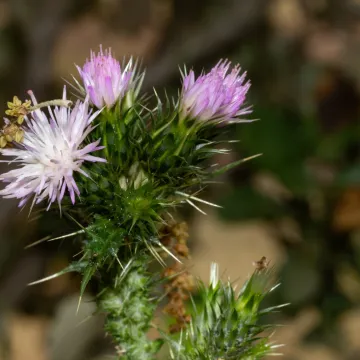
Botanically, the plant is characterized by a height ranging from 0.5 to 1.5 meters, with winged, spiny stems that extend up to the flower heads. The leaves are deeply lobed and armed with sharp spines. The distinct feature of this species is its small flower heads, which are tightly clustered at the end of the stems, producing seeds that are easily dispersed by wind and water.
Regarding cultivation requirements, the plant prefers fertile, nitrogen-rich soils but shows high tolerance for various soil types, provided they are not excessively waterlogged. Agricultural management usually involves a combination of mechanical control, such as grubbing out the rosettes in the first year, and chemical control using selective herbicides during the early growth stages.
Despite its negative impact on agriculture, the plant provides nectar for various bee species, acting as a late-season pollen source in some environments. Major pests include thistle head weevils and aphids, while fungal pathogens like rust can significantly impact plant health in humid conditions. Integrated management is essential to prevent its encroachment into valuable crop lands.
Photo gallery