Musk thistle
Carduus nutans L.
Description
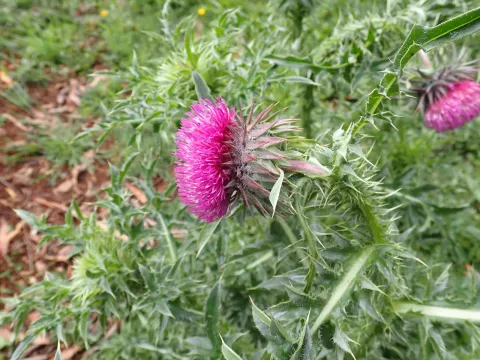
Musk thistle (Carduus nutans L.) is a biennial flowering plant belonging to the Asteraceae family. Often recognized by its nodding, deep purple flower heads, it is a significant plant in both ecological and agricultural contexts, frequently categorized as a problematic weed in pastures and rangelands across the globe.
The species is native to Europe, Western Asia, and North Africa. It has successfully invaded diverse climates, particularly in North America and Oceania, where its aggressive growth habit allows it to outcompete forage species in meadows and pastures. Its successful distribution is attributed to its high seed production and ability to colonize disturbed soils.
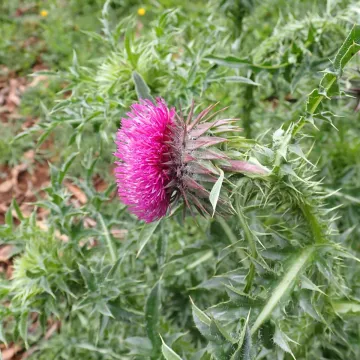
Botanical features of the musk thistle include a stout taproot and a branching stem that can reach heights of up to 1.5 meters. The leaves are deeply lobed and armed with sharp spines, providing protection from herbivores. The distinctive drooping flower head is surrounded by spiny bracts, which is a key diagnostic feature for field identification.
In terms of agricultural management, musk thistle thrives in well-drained, sunny locations with a wide range of soil pH levels. Control strategies primarily focus on mechanical removal during the rosette stage and the application of herbicides. Mowing is effective only if timed precisely before the plant sets viable seeds, as the lifecycle is strictly regulated by biennial developmental cycles.
While often treated as a noxious weed, musk thistle serves as a vital nectar source for honey bees and various pollinators. However, it is also a host for several plant viruses and is susceptible to various rust fungi. Biological control using specific weevils has been implemented in several countries to reduce seed production and manage overall population density effectively.
Photo gallery