Cat's-claws grevillea
Grevillea alpina Lindl.
Description
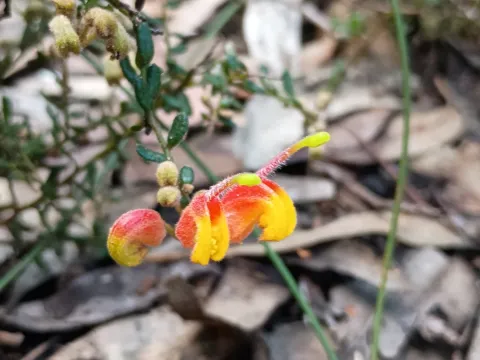
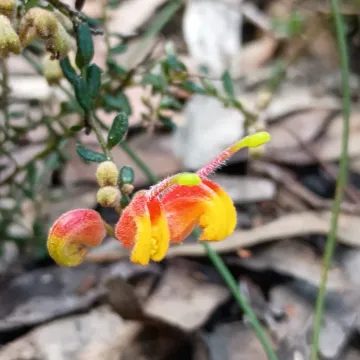
Cat's-claws grevillea (Grevillea alpina) is an evergreen shrub belonging to the Proteaceae family. Highly regarded for its ornamental value, this species is named for the unique, claw-like shape of its flowers. It serves as an excellent addition to gardens in Mediterranean-style climates, offering a long flowering season that significantly enhances local biodiversity.
Native to southeastern Australia, particularly in Victoria and New South Wales, the plant thrives in diverse environments ranging from woodland understories to open heathlands. Its natural distribution has favored individuals that can withstand periodic drought and nutrient-poor, rocky substrates. This evolutionary history makes it a resilient choice for specialized landscaping projects.
The plant typically grows as a compact shrub, usually ranging from 0.5 to 2 meters in height. The foliage is often covered in fine, silky hairs, which provide a protective layer against transpiration. The inflorescences can display a wide palette of colors, including white, yellow, orange, and vibrant shades of red. These flowers are highly attractive to nectar-feeding birds, making the shrub a magnet for garden wildlife.
Successful cultivation requires strict adherence to drainage requirements. The soil must be well-drained, acidic to neutral, and low in phosphorus. As a member of the Proteaceae family, the plant has evolved specialized root structures that can be harmed by conventional high-phosphorus fertilizers. Irrigation should be restricted to young plants, as established specimens show significant drought tolerance.
Pest and disease management is primarily focused on prevention. Root rot is the most common issue, typically caused by waterlogged soil or poor aeration. In some cases, aphids or scale insects may infest the foliage, requiring manual removal or targeted treatment.
- Maintain excellent drainage in all planting sites.
- Avoid using high-phosphorus fertilizers completely.
- Prune lightly after flowering to maintain a dense, tidy habit.
- Ensure good air circulation to prevent fungal foliage issues.
Photo gallery