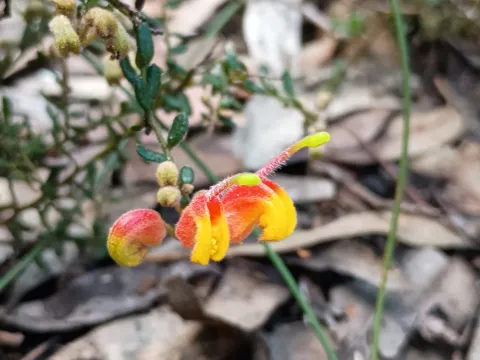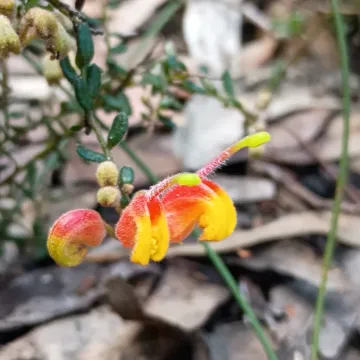
Grevillea alpina x Grevillea lavandulacea
Grevillea alpina x Grevillea lavandulacea
Description
Grevillea alpina x Grevillea lavandulacea is a noteworthy interspecific hybrid belonging to the Proteaceae family. This ornamental evergreen shrub is highly valued for its striking floral display and compact growth habit, which makes it a preferred choice for gardeners interested in Australian native flora and xeriscaping.
The plant originates from the southern regions of Australia, where its parent species have evolved to thrive in diverse, often harsh environments. Its native habitat includes rocky outcrops and sandy plains with low nutrient availability, which has shaped the plant’s robust nature and its distinct requirements for excellent drainage in a garden setting.
Botanically, the hybrid is characterized by dense, often pubescent foliage that contributes to its drought resistance. The inflorescences are distinct, bearing the classic spider-like shape typical of the Grevillea genus, with colors ranging from deep pink to soft red. Typically, the shrub matures into a compact mound, making it suitable for smaller spaces and borders.
Agricultural and gardening requirements for this plant focus on replicating its natural environment. It thrives in well-drained, slightly acidic to neutral soils and requires full sun exposure to bloom effectively. A critical aspect of its care is to avoid high-phosphorus fertilizers, which can be toxic to many species within the Proteaceae family, and to prevent any form of waterlogging.
- Ensure deep soil drainage to prevent root issues.
- Place in a location with at least 6–8 hours of sunlight daily.
- Avoid phosphorus-rich fertilizers; use native-specific products.
- Prune lightly after the flowering season to maintain density.
The primary use of this hybrid is ornamental, serving as a focal point in rock gardens, coastal landscaping, or as a feature plant in contemporary gardens. Because of its structural beauty and exotic flowers, it is also popular in sustainable landscape design, where drought tolerance and low maintenance are top priorities for plant selection.
Like many plants from this family, this Grevillea is susceptible to Phytophthora root rot, especially in stagnant, heavy, or waterlogged soils. Common pests include scale insects and spider mites, which can proliferate in hot, dry conditions with poor air circulation. Regular inspection and maintaining appropriate soil moisture levels are the most effective measures for plant health management.
Photo gallery