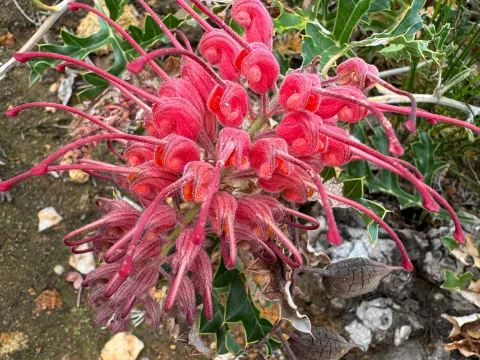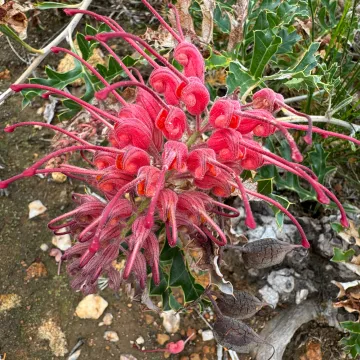
Grevillea bipinnatifida hybrid
Grevillea bipinnatifida x Grevillea thyrsoides subsp. pustulata
Description
Grevillea bipinnatifida x Grevillea thyrsoides subsp. pustulata is a distinct interspecific hybrid belonging to the Proteaceae family. This ornamental shrub is a product of Australian plant breeding, designed to showcase the intricate foliage of the bipinnatifida parent combined with the unique inflorescence structures of the thyrsoides lineage. It is highly valued as an evergreen ornamental plant in suitable climates.
The plant originates from the diverse ecosystems of Western Australia. Due to its genetic background, it is naturally adapted to Mediterranean-style climates characterized by dry summers and mild, wet winters. Outside its native range, it is primarily grown in botanical gardens, greenhouses, or as a container plant in temperate regions, as it lacks significant frost tolerance.
Botanically, this hybrid is known for its fern-like, deeply lobed foliage that provides excellent texture throughout the growing season. The flowers are produced in dense, comb-like clusters, where the vibrant styles serve as the primary visual display, attracting various nectar-feeding birds. The plant maintains a shrubby, semi-spreading habit that is very versatile in landscape architecture.
Cultivation requires specific conditions: well-drained, sandy or loamy soils are essential to prevent root rot. One critical aspect of its agrotechnology is its intolerance to high phosphorus levels; therefore, standard fertilizers should be avoided in favor of specific Proteaceae-friendly nutrient blends. It thrives in full sun and requires minimal pruning, which should be done immediately after flowering to maintain shape.
The primary use of this plant is in ornamental horticulture, serving as a focal point in rock gardens or as part of mixed Australian native shrub borders. Aside from its aesthetic appeal, it serves as an important resource for local fauna. Typical health issues include phytophthora root rot in poorly drained soils and minor infestations of scale insects or mites, which can be managed with standard horticultural oil treatments.
Photo gallery