Climbing hydrangea
Hydrangea anomala D. Don subsp. petiolaris (Siebold & Zucc.) E. M. McClint.
Description
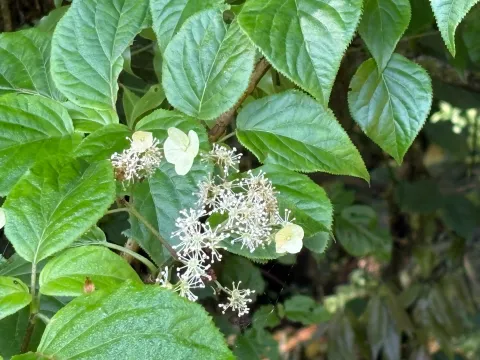
Climbing hydrangea (Hydrangea anomala subsp. petiolaris) is a vigorous, deciduous woody vine belonging to the Hydrangeaceae family. Unlike shrub-type hydrangeas, this species possesses aerial rootlets that allow it to cling firmly to rough surfaces such as masonry, bark, or wooden trellises, enabling it to climb to impressive heights.
Native to the woodlands of East Asia, including Japan, Korea, and parts of the Russian Far East, this plant has become a prized specimen in temperate gardens worldwide. Its natural habitat suggests a preference for cool, humid environments, making it exceptionally well-suited for shaded or partially shaded north-facing walls.
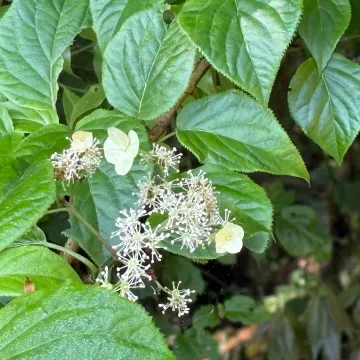
Botanically, the plant is characterized by lustrous, heart-shaped leaves that turn a warm yellow in autumn. Its primary ornamental feature is the late-spring and early-summer display of large, lacecap-style inflorescences. These white, fragrant blossoms create a striking contrast against the dark green foliage during the flowering season.
The cultural requirements for climbing hydrangea include moisture-retentive, organic-rich soil that is slightly acidic. While it is slow to establish, once settled, it is quite hardy. Pruning should be kept to a minimum and is typically performed after flowering to manage size or remove dead wood, ensuring the vine maintains its structural integrity on its support.
In landscaping, it serves as an excellent climber for covering large walls, fences, or old tree stumps. It is generally robust and free from significant pest issues; however, growers should remain vigilant against common fungal pathogens like leaf spot or powdery mildew, particularly in sites with poor air circulation or excessive soil moisture.
Photo gallery