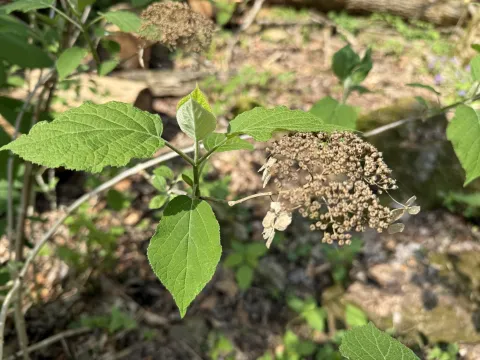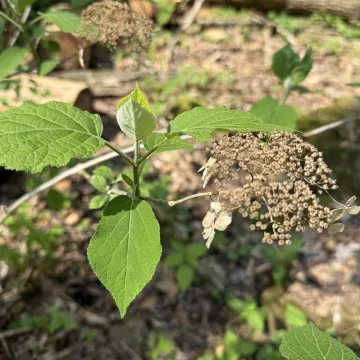

Smooth hydrangea
Hydrangea arborescens L. x Hydrangea macrophylla (Thunb.) Ser.
Description
Smooth hydrangea (Hydrangea arborescens) is a deciduous flowering shrub belonging to the Hydrangeaceae family. Native to the eastern United States, it is widely prized for its robust nature and impressive floral displays. As a hardy plant, it is one of the most reliable choices for gardeners looking for consistent performance in various climate zones, including regions with cold winters.
Botanically, this shrub features a rounded habit with large, ovate leaves that provide a lush green backdrop for its blooms. The plant produces massive, dome-shaped clusters of tiny white or greenish-white florets. Unlike many other hydrangea species that bloom on old wood, this variety typically flowers on new growth, which simplifies the pruning process and ensures a bloom even if winter damage occurs.
Successful cultivation requires a location with partial shade and rich, well-draining soil. These plants thrive in environments with consistent moisture and protection from harsh afternoon sun, which can scorch the foliage. The soil should be slightly acidic to maintain optimal nutrient uptake, and the application of organic mulch is recommended to regulate root temperature and preserve vital soil humidity.
In landscaping, the smooth hydrangea is a versatile tool for designers and homeowners alike. It is commonly used in mixed shrub borders, as a standalone specimen plant, or planted in mass for dramatic impact. Its ability to thrive in partial shade makes it a top choice for woodland gardens and north-facing landscapes where sun-loving plants struggle to survive.
While relatively low-maintenance, the plant can be susceptible to certain pests and diseases, such as leaf spot, powdery mildew, and aphids, particularly if airflow is poor. Maintaining plant health through proper spacing and regular monitoring is essential.
- Prune back heavily in late winter to encourage vigorous new stems.
- Ensure regular deep watering during summer heatwaves.
- Apply balanced, acidic fertilizers during early spring.
- Monitor foliage for common garden pests during humid weather.
Photo gallery