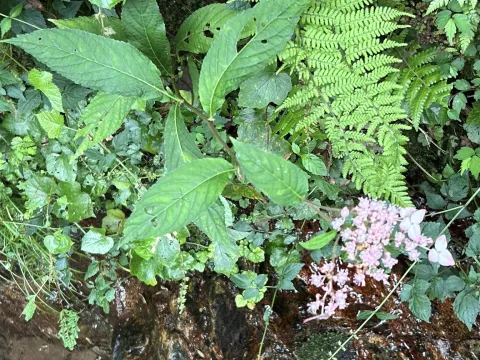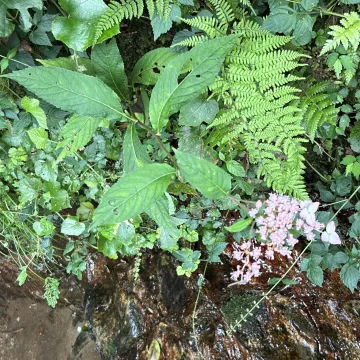
Hydrangea alternifolia x amamiohsimensis
Hydrangea alternifolia Siebold x Hydrangea amamiohsimensis (Koidz.) Y. De Smet & C. Granados
Description
Hydrangea alternifolia x amamiohsimensis is a distinct hybrid cultivar belonging to the Hydrangeaceae family. This plant is a unique cross between two Japanese native species, specifically identified by its botanical lineage involving Hydrangea alternifolia and Hydrangea amamiohsimensis. As a specialized hybrid, it is increasingly studied for its horticultural potential and unique structural characteristics.
Originating from the subtropical regions of Japan, particularly the Amami Islands, this plant is naturally adapted to forest understories where dappled light and high humidity prevail. Its native environment dictates its cultivation requirements, making it a plant that thrives best in greenhouse conditions or temperate gardens that mimic its natural habitat. It does not tolerate extreme cold, necessitating protection in northern latitudes.
Botanically, the plant is distinguished by its alternate leaf arrangement and specific inflorescence structure, inherited from its parents. The foliage is generally dense and evergreen or semi-evergreen, depending on the environment. The plant grows as a shrub that requires controlled pruning to maintain its vigor and aesthetic form, often exhibiting a moderate growth rate when provided with optimal light levels.
Agronomic requirements are centered around acidic, well-draining soil rich in organic matter. Cultivators must ensure the pH levels remain within the range of 4.5 to 5.5 to prevent nutrient lockout. Watering must be consistent, using only non-alkaline water to avoid chlorosis. Fertilizer application should be focused on specific formulations for acid-loving shrubs, applied during the active growth phase.
The primary use of this hybrid is in ornamental horticulture and botanical collections. Typical pests include spider mites and aphids, which can be managed with biological or systemic control. Common diseases are predominantly fungal, such as powdery mildew or leaf spots, which thrive in stagnant air. Proper spacing and airflow management are critical components of maintaining a healthy plant.
Photo gallery