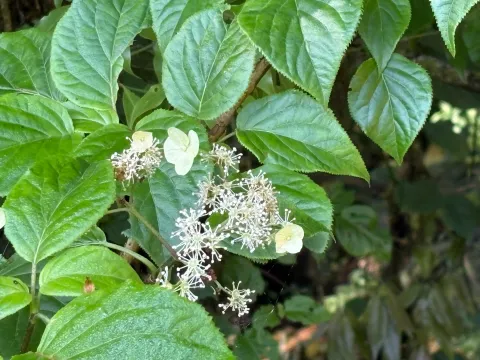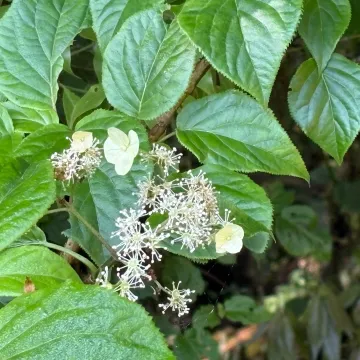
Climbing hydrangea
Hydrangea anomala D. Don subsp. petiolaris x Hydrangea seemannii L. Riley
Description
Climbing hydrangea (Hydrangea anomala subsp. petiolaris) is a deciduous woody vine belonging to the Hydrangeaceae family. It is uniquely distinguished by its ability to scale walls, trees, and trellises using specialized aerial rootlets that act as holdfasts, allowing it to climb to impressive heights.
The plant is native to the temperate forests of East Asia, including Japan, Korea, and parts of China and Russia. Over the decades, it has become a staple in horticultural practices across Europe and North America, prized for its extreme winter hardiness and its ability to thrive in shadier garden environments.
Botanically, it features lustrous, heart-shaped dark green leaves that turn a striking golden yellow in autumn. The inflorescences are typical of the genus: large, flat-topped corymbs composed of a mixture of small fertile flowers and a perimeter of showy, white, sterile sepals that bloom in late spring to early summer.
In terms of agricultural requirements, the climbing hydrangea thrives in moist, well-drained, acidic soil rich in organic matter. While it is tolerant of shade, partial shade is ideal; full sun exposure in hot climates can scorch the leaves and stunt the plant's growth, necessitating consistent irrigation during drought periods.
Economically and aesthetically, this plant is favored for its low maintenance once established, serving as an excellent choice for north-facing walls where other plants struggle. Typical pests include aphids and mites, while fungal issues like leaf spot or powdery mildew can occur if airflow is poor, necessitating preventative maintenance and clean cultivation practices.
Photo gallery