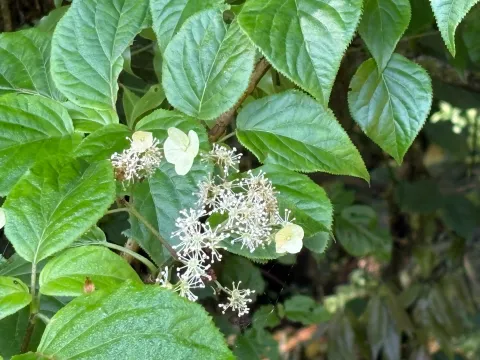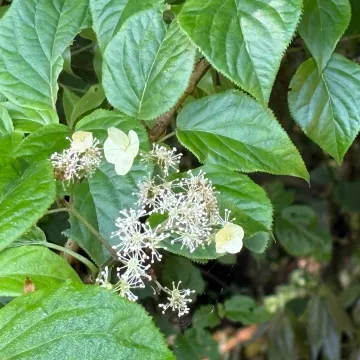
Climbing hydrangea
Hydrangea anomala D. Don
Description
Climbing hydrangea (Hydrangea anomala) is a deciduous woody vine belonging to the Hydrangeaceae family. Unlike other popular hydrangea varieties, this species is specifically adapted to vertical growth, using aerial rootlets to cling to walls, fences, or tree trunks, making it an excellent candidate for architectural landscaping.
Native to the woodlands of East Asia, including Japan, China, and Korea, this plant is accustomed to forest environments. Its natural habitat is characterized by filtered light and nutrient-rich, moist soils, which gardeners must replicate to ensure vigorous growth and healthy foliage development.
Botanically, the plant is distinguished by its broad, heart-shaped leaves and spectacular lacecap-style inflorescences. While it may grow slowly when first established, once it reaches a mature size, the vine can spread extensively, providing a dense, lush appearance that covers large areas with ease.
Cultivation requirements for this species include:
- Soil: acidic, fertile, humus-rich, and well-draining yet moist.
- Light: thrives in partial to full shade; direct afternoon sun can cause leaf scorch.
- Hardiness: generally hardy, though it benefits from shelter in harsh, windy climates.
- Maintenance: requires regular mulching to keep roots cool and balanced mineral fertilization.
The primary use for the climbing hydrangea is in ornamental horticulture. It is frequently employed to disguise stone walls, cover pergolas, or wrap around mature tree trunks. Additionally, it serves effectively as a ground cover, suppressing weeds in shaded parts of the garden where turf grass fails to establish.
While relatively robust, the plant is susceptible to iron chlorosis in alkaline soils, which results in yellowing of the foliage. Fungal issues, such as powdery mildew, may occur if air circulation is poor. Keeping the plant properly pruned and ensuring it is not overly crowded helps prevent pest infestations like aphids or mites.
Photo gallery