Bunge's corydalis
Corydalis bungeana
Description
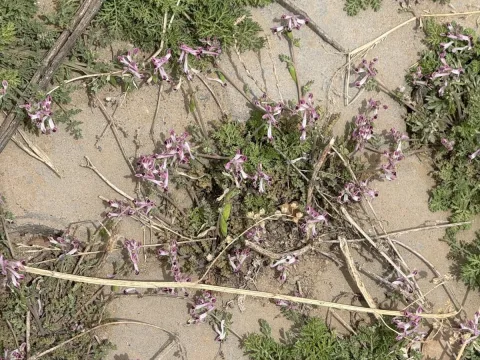
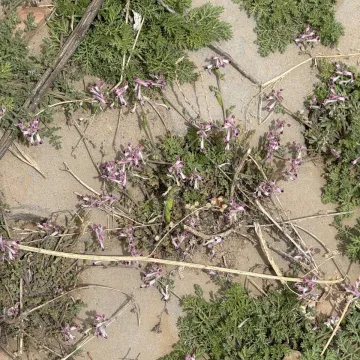
Bunge's corydalis (Corydalis bungeana) is a perennial herbaceous plant belonging to the Papaveraceae (poppy) family. As an ephemeral plant, it is specifically adapted to maximize growth during the short, cool windows of early spring when moisture is abundant and competition from other flora is minimal.
The native habitat of this species is spread across East Asia, including regions of China, Mongolia, and the Russian Far East. It is typically found in arid or semi-arid environments, growing in rocky outcrops, sandy riverbeds, and open steppes, which has contributed to its high resilience and adaptability to different soil types.
Botanically, the plant is characterized by a tuberous root system that stores energy, allowing it to remain dormant during harsh, dry summer months. The foliage is finely dissected and often glaucous in color. Its inflorescences are racemes of yellow-colored flowers with a distinct spur, which is a hallmark of the genus Corydalis.
The cultivation of Corydalis bungeana requires strict attention to soil drainage. It thrives in light, well-draining soil mixtures. Overwatering is the most common cause of failure in agricultural settings, particularly during the dormant season. It is generally resistant to pests, though proper crop rotation and site selection are essential for maintaining plant health.
Economically, the plant is significant in phytochemistry, serving as a source of specific alkaloids used in pharmaceuticals for pain management and sedative applications. In landscape management, it is prized for its early spring blooms. Common threats include root rot caused by stagnant moisture and potential competition from invasive weeds if not properly managed during the active growth phase.
Photo gallery