Corydalis conorhiza
Corydalis conorhiza
Description
Corydalis conorhiza is a perennial herbaceous plant belonging to the Papaveraceae family. While not a conventional agricultural crop, it is of high interest in botanical circles and pharmaceutical research due to its unique biological compounds and its status as a specialized alpine species adapted to extreme mountain environments.
This species is native to the high-altitude regions of the Caucasus. It thrives in subalpine and alpine meadows, often found on rocky slopes and near glacial zones. Its distribution is restricted by its highly specific ecological requirements, which make it a rare find outside of its natural mountain habitat.
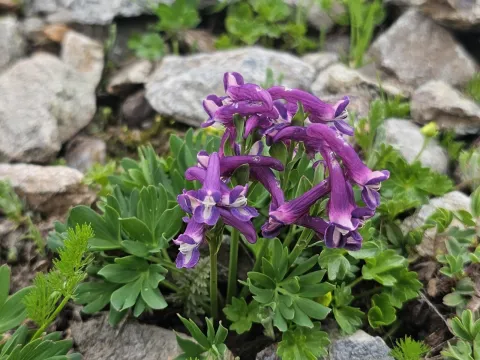
Botanically, the plant is characterized by a distinctive conical-shaped root system that acts as a vital nutrient store. The leaves are finely dissected, and the flowers grow in dense, attractive clusters. This growth pattern allows the plant to emerge rapidly during the short alpine summer, completing its life cycle before the onset of the cold season.
Cultivation of this species requires strict adherence to environmental parameters. The plant demands well-drained, porous soils that mimic the scree slopes of its origin. It cannot tolerate high humidity or stagnant water, as these conditions lead to root decay. Consistent light exposure and cool ambient temperatures are essential for maintaining plant health and vigor.
In terms of economic value, the plant is primarily studied for its potential medicinal properties, particularly the presence of specific alkaloids. It is also grown in alpine gardens as a rare ornamental species. Regarding pests and diseases, the plant is relatively robust, but it must be protected from fungal pathogens that can develop if soil moisture levels exceed the plant's natural tolerance.
Photo gallery