Pale corydalis
Corydalis pallida
Description
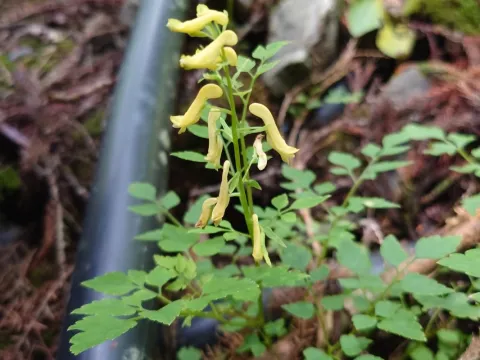
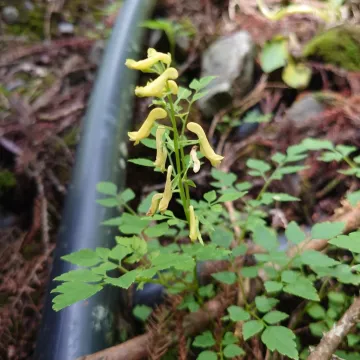
Pale corydalis (Corydalis pallida) is a herbaceous plant belonging to the Papaveraceae family. Known for its distinct yellowish flowers and delicate foliage, this species is increasingly recognized in both ornamental horticulture and botanical research due to its resilient nature and early spring blooming cycle.
The plant originates from East Asia, primarily inhabiting regions across China, Korea, and Japan. It is typically found in mountainous areas, rocky slopes, and forest margins. Its ability to colonize diverse landscapes has made it a subject of interest for cultivation in temperate zones where environmental conditions mirror its native habitat.
Botanically, it features a cluster of bipinnate or tripinnate leaves that provide a soft, fern-like appearance. The flowers are arranged in terminal racemes, displaying a characteristic spurred shape that is typical of the genus. Its root system is generally fibrous to taproot-like, supporting the plant through rapid vegetative growth cycles.
Successful cultivation requires attention to soil composition, which should be well-draining and slightly acidic to neutral. While the plant is drought-tolerant once established, optimal growth is achieved through consistent, moderate irrigation during the active growing phase. Providing adequate spacing helps to ensure sufficient airflow, which is critical for preventing common foliage diseases.
In terms of agricultural and practical application, the plant is valued for its potential pharmaceutical uses, as it contains bioactive alkaloids. In landscaping, it is used for naturalistic planting schemes and early-season color. Growers should monitor for common pests such as aphids and slugs, which can affect young sprouts, and ensure the soil is not overly compacted to promote healthy root development.
Photo gallery