Sharp spike-rush
Eleocharis acuta
Description
Sharp spike-rush (Eleocharis acuta) is a perennial herbaceous plant belonging to the Cyperaceae family. It is a specialized aquatic and semi-aquatic species, recognized for its ability to thrive in inundated habitats and its crucial role in maintaining wetland biodiversity.
The native range of this species is primarily centered in Australia and nearby island regions. It is well-adapted to diverse environmental conditions, spanning various water temperatures and soil types. In an agricultural and land-management context, it is valued for its hardiness and ability to rapidly stabilize wet environments.
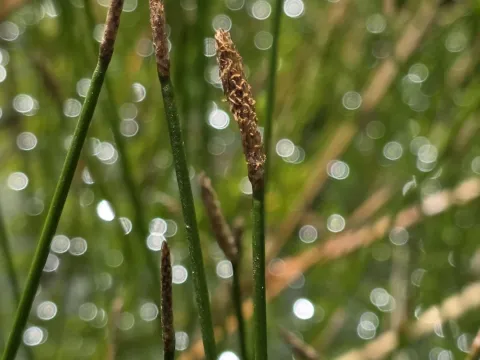
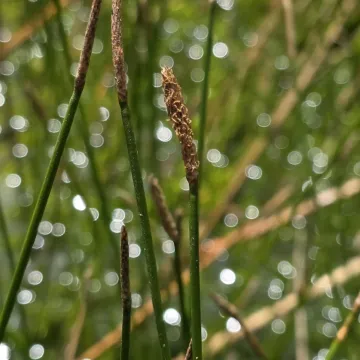
Botanically, Eleocharis acuta features slender, erect, dark green stems that can grow up to 80 cm tall. The leaves are largely reduced to sheaths at the base of the stems, while the photosynthesis process occurs mainly in the stems themselves. The plant produces a terminal spikelet containing the flowers, which is a diagnostic feature of the Eleocharis genus.
Climate and soil requirements for this crop involve a preference for wet, muddy, or clay-based substrates. It is essential to maintain consistent moisture levels, as the plant does not tolerate prolonged drought. Optimal growth is observed in open, sunny locations with slow-moving or standing water, which helps in nutrient absorption from the substrate.
- Excellent tolerance to fluctuating water levels.
- Strong rhizomatous growth for soil binding.
- Effective at removing excess nitrates from water.
- Low maintenance requirements once established.
The primary economic use of the sharp spike-rush is in environmental engineering and landscape management. It is widely employed for shoreline stabilization, erosion control along water bodies, and as a natural filtration agent in wastewater treatment systems. Its utility in ecological restoration projects makes it a preferred choice for rehabilitating degraded wetland habitats.
Typical diseases and pests associated with this plant are relatively rare under optimal water conditions. Potential threats include fungal pathogens that develop in stagnant, highly polluted water, and certain aquatic invertebrates that graze on the stems. Management practices should focus on maintaining water quality and preventing excessive siltation, which ensures the plant remains vigorous and resilient.
Photo gallery