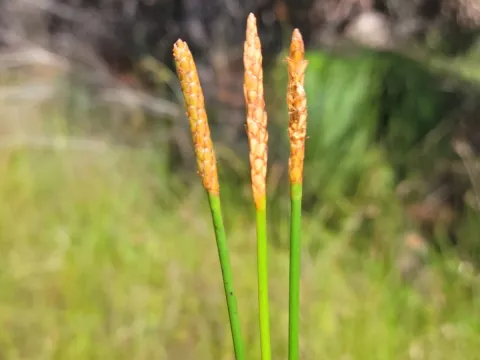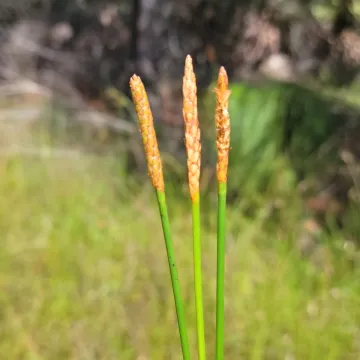
Gulf Coast spikerush
Eleocharis cellulosa
Description
Gulf Coast spikerush (Eleocharis cellulosa) is a perennial herbaceous plant belonging to the Cyperaceae family. It is widely recognized for its unique cellular stem structure, which is clearly visible when the stem is cross-sectioned. This species is an integral component of wetland ecosystems, thriving in environments that many other plant species cannot tolerate.
Native to the Americas, this plant is commonly found in tropical and subtropical regions, spanning from the southeastern United States to the Caribbean and Central America. Its habitat includes marshes, pond margins, and shallow coastal areas. The species exhibits a remarkable ability to adapt to varying depths of water and seasonal inundation.
From a botanical standpoint, the plant is characterized by its rhizomatous growth habit, which allows it to form dense stands. The stems are cylindrical, leafless, and reach heights of up to 90 centimeters. The reproductive structure consists of a single terminal spikelet, which produces small seeds that facilitate dispersal during high-water events.
Cultivation requirements involve high light intensity and consistently moist, nutrient-rich substrates such as organic mud or silt. It is a highly resilient plant that can handle standing water quite well, making it ideal for riparian management. While it prefers freshwater conditions, it has shown moderate tolerance to brackish water environments, which is common in its natural range.
Key areas for хозяйственного usage include:
- Phytoremediation of wastewater in constructed wetlands.
- Shoreline stabilization and erosion control for water bodies.
- Restoration of degraded marshlands and wetland habitats.
- Enhancing wildlife biodiversity by providing cover for birds and aquatic organisms.
The plant is relatively hardy, though it may be susceptible to fungal diseases if water circulation is poor or if the density becomes too high, creating a stagnant microclimate. Monitoring for water-borne pathogens and ensuring proper sediment health are the primary management tasks for maintaining robust populations of this valuable wetland grass.
Photo gallery