
Carniolan spikerush
Eleocharis carniolica
Description
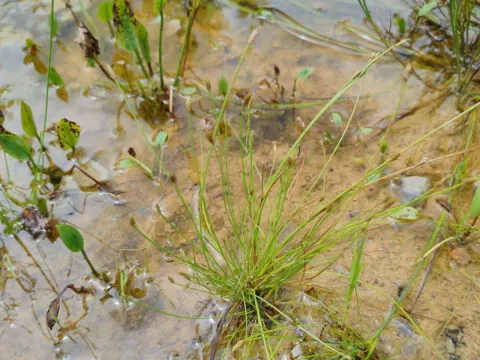
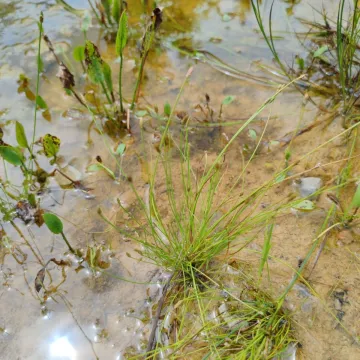
Carniolan spikerush (Eleocharis carniolica) is a perennial herbaceous plant belonging to the Cyperaceae family. It is a moisture-loving species naturally adapted to habitats with excess water, such as wetlands, marshy meadows, and riparian zones.
The plant originates from Central and Southeastern Europe. Its geographical range is strictly tied to humid environments in countries such as Italy, Slovenia, and Austria. Due to its specific environmental preferences, it is often found in stable riparian ecosystems where water tables remain high throughout the year.
Botanically, the species is characterized by its slender, leafless stems which perform the process of photosynthesis. It features a creeping rhizome system that allows the plant to form dense mats. The inflorescence is a small, solitary terminal spikelet located at the top of the stem, containing tiny seeds adapted for dispersal by water.
Cultural requirements involve maintaining high soil moisture levels and avoiding total desiccation of the site. It thrives in soils with neutral to slightly acidic pH and requires sufficient ambient humidity. It is highly sensitive to changes in hydrological regimes, making it an excellent indicator of environmental health in its native range.
While not a traditional agricultural crop in the commercial sense, its utility lies in habitat restoration, erosion control along water bodies, and biodiversity support. Potential risks include fungal infections occurring in stagnant water conditions and various insects that feed on the succulent stem tissues.
Photo gallery