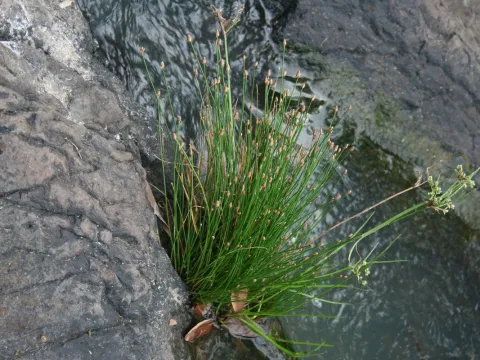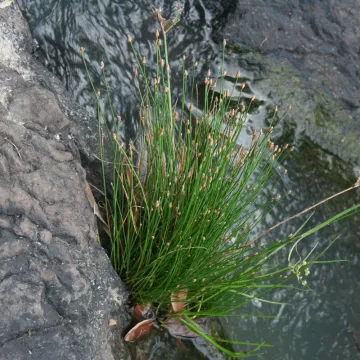
Slender spikerush
Eleocharis filiculmis
Description
Slender spikerush (Eleocharis filiculmis) is a perennial herbaceous plant belonging to the Cyperaceae family. As a specialized hydrophyte, it has evolved to thrive in wetland ecosystems and shallow aquatic environments. From an agronomic perspective, this species is noted for its high adaptability to unique hydrological regimes, making it a subject of interest for sustainable land management in wet areas.
The origin of this species is traced back to the tropical and subtropical regions of South America. Its native range includes moist savannas, river floodplains, and coastal zones where seasonal water level fluctuations are standard. The crop demonstrates remarkable resilience to prolonged periods of waterlogging, which characterizes its survival strategy in such demanding environments.
Botanically, Eleocharis filiculmis is defined by its thin, thread-like stems that form dense, compact tufts. Its root system is fibrous and extensive, which is highly effective for soil stabilization and substrate anchoring. The plant utilizes both sexual reproduction via seeds and vegetative propagation, allowing for rapid colonization of available niches when environmental moisture requirements are met.
Climatic requirements for this species are typical of warm-climate flora. It exhibits optimal growth under high-temperature conditions with ample sunlight exposure. The soil or substrate must remain consistently moist or saturated, ideally rich in organic matter with a neutral to slightly acidic pH level. Agronomic practices involve careful management of water table levels and stand density control to maximize productivity.
The agricultural and economic utility of slender spikerush includes:
- Serving as forage material in natural pastures within flood-prone regions.
- Application in phytoremediation projects to treat wastewater and restore damaged wetlands.
- Ornamental use in landscaping and artificial aquatic pond management.
- Soil erosion control along banks and waterways due to its strong root development.
Typical diseases and pests associated with Eleocharis filiculmis primarily involve fungal pathogens triggered by stagnant water conditions or excessive nitrogen inputs. Furthermore, certain insects specializing in Cyperaceae may affect its biomass. Integrated management focuses on maintaining a healthy hydraulic balance and conducting regular sanitary inspections to prevent widespread damage.
Photo gallery