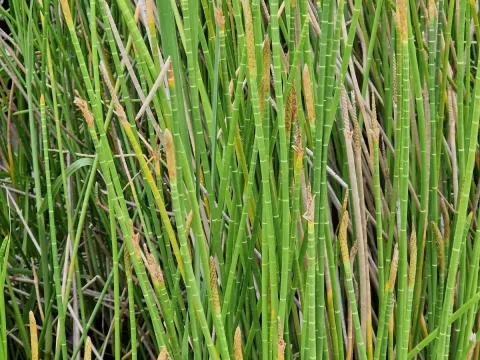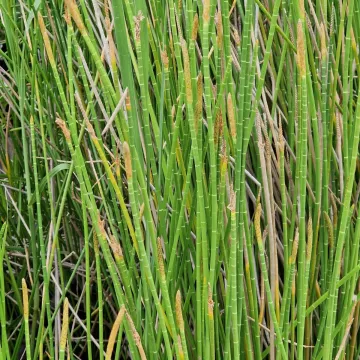
Jointed spikerush
Eleocharis interstincta
Description
Jointed spikerush (Eleocharis interstincta) is a perennial herbaceous plant belonging to the Cyperaceae family. In agronomy, this species is categorized as a beneficial hydrophyte that thrives in saturated soils and shallow water environments. It is recognized for its unique cylindrical culms that feature distinctive internal septa, making it a robust species for wetland management.
The native range of this crop includes tropical and subtropical regions across the Americas. It naturally inhabits marshes, ponds, and slow-moving streams. Currently, it is being integrated into modern agricultural practices as a specialized crop for water purification and environmental restoration, demonstrating versatility in diverse wetland conditions.
Botanically, Eleocharis interstincta is characterized by erect stems reaching up to one meter in height, which are strictly leafless, consisting only of culms. The root system is an extensive rhizomatous network, allowing the plant to spread rapidly across aquatic substrates. Reproduction occurs effectively through both rhizome fragmentation and the production of seeds located in terminal spikelets.
Agronomic requirements for this crop focus on maintaining consistent water levels, as the species is highly sensitive to desiccation. It prefers silty soils with high organic matter content and requires significant light exposure to maintain healthy growth rates. Careful management of the aquatic environment is essential to ensure maximum biomass production, especially in commercial scale cultivation.
Key areas of хозяйственного use include:
- Phytoremediation of wastewater in artificial wetlands and lagoons.
- The production of fibers for traditional basketry and handicrafts.
- Enhancing biodiversity by providing habitats for aquatic fauna.
- Erosion control and shoreline stabilization in artificial reservoirs.
Typical plant health issues involve fungal infections related to poor water oxygenation and stagnation. Pest issues are generally minimal but may include specific types of stem-boring insects in localized regions. Effective management strategies involve monitoring water quality, ensuring proper flow, and preventing the over-accumulation of debris to maintain an optimal growing environment for the spikerush.
Photo gallery