Mud spikerush
Eleocharis limosa
Description
Mud spikerush (Eleocharis limosa) is a perennial herbaceous plant belonging to the Cyperaceae family. It is an obligate hydrophyte, structurally adapted to thrive in saturated soil conditions, marshes, and shallow water environments. The plant is characterized by its significant ability to tolerate anaerobic conditions, making it an essential species for maintaining the health of wetland ecosystems.
Native to tropical and subtropical regions of South America, the plant is adapted to warm climates with consistent moisture availability. In agricultural practices, its cultivation area is restricted to zones where it can avoid severe freezing temperatures. The plant requires specialized hydrological management, which allows it to flourish in areas where other crops might fail due to excessive waterlogging.
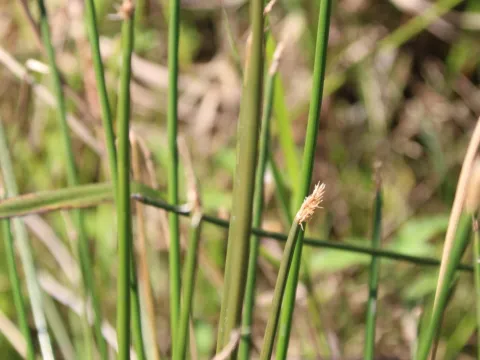
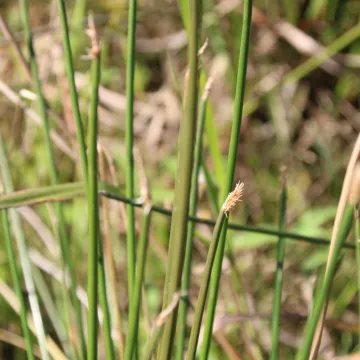
From a botanical standpoint, Eleocharis limosa features slender, leafless cylindrical stems and a vigorous rhizomatous root system. This morphology allows for rapid horizontal expansion and effective nutrient absorption directly from the submerged sediment. The reproductive process typically involves the development of small terminal spikelets, which serve as the primary source for seed propagation in favorable environments.
Agrotechnical requirements focus on soil moisture maintenance and adequate light exposure. The optimal soil for cultivation is rich in organic matter and silt, providing a stable pH level. Irrigation management is critical; the substrate should remain saturated throughout the growing season. Growers should ensure that mineral content does not reach toxic levels, as the plant can be sensitive to rapid changes in water chemical composition.
The primary directions for хозяйственного use include phytoremediation, erosion control on riverbanks, and landscaping for ornamental water features. It is frequently employed to manage water quality by absorbing excess nutrients. Common pests and diseases are minimal, though stagnant water conditions can occasionally lead to fungal infections. Effective maintenance involves regular thinning and ensuring that the water circulation remains sufficient to prevent localized decay.
Photo gallery