
Northern spike-rush
Eleocharis mamillata
Description
Northern spike-rush (Eleocharis mamillata) is a perennial herbaceous plant belonging to the Cyperaceae family. In agricultural and environmental engineering, it is valued as a hardy hydrophyte capable of thriving in saturated soils, making it an essential component for wetland restoration and natural water purification systems.
The species is native to the temperate regions of the Northern Hemisphere, spanning across Europe, Asia, and North America. Its natural habitat includes marshes, pond margins, and wet meadows. Because of its ecological resilience, it is often cultivated or encouraged in areas requiring soil stabilization and biodiversity enhancement within water-logged landscapes.
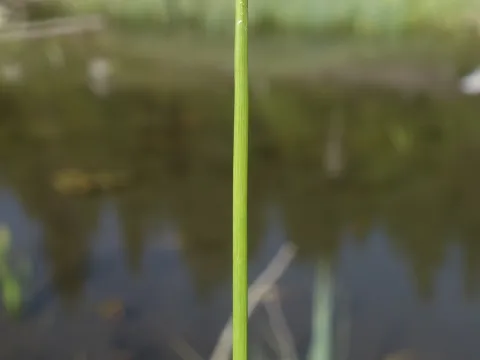
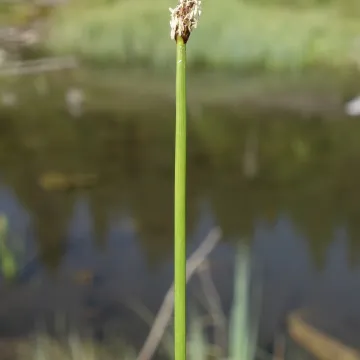
Botanically, it features a robust rhizome system that supports dense clusters of upright, leafless green stems. The plant reaches heights of 20 to 80 cm. The reproductive structure consists of a single, terminal spikelet that gives the plant its diagnostic appearance. This structural simplicity allows it to allocate energy efficiently toward vegetative expansion in aquatic environments.
Cultivation requirements for this species are centered on hydrologic stability. It thrives in soils with high organic matter content, such as peat or silt, and requires a consistent water table to maintain growth vigor. Unlike traditional terrestrial crops, this plant is best managed by controlling the water depth rather than by mechanical soil cultivation or heavy fertilization.
Economic and ecological applications are diverse, ranging from its use in constructed wetlands for phytoremediation to its role in preventing shoreline erosion. While the plant is generally hardy, it can be susceptible to certain fungal pathogens when water circulation is poor. Effective management involves monitoring for competitive aquatic weeds that may threaten established stands during the early stages of development.
Photo gallery