Sand spikerush
Eleocharis montevidensis
Description
Sand spikerush (Eleocharis montevidensis) is a perennial herbaceous plant belonging to the Sedge family (Cyperaceae). This aquatic or semi-aquatic species is characterized by its adaptability to wet conditions, thriving in environments where moisture is constant. It is widely recognized for its aesthetic value in landscaping and its functional role in natural water management systems.
The plant is native to the Americas, with a natural range extending from the southern United States through Central and South America. Its cultivation is popular in regions where the climate allows for warm, moist growing conditions. Due to its hardiness, it has become a staple in aquatic nurseries and professional landscaping projects aiming for a naturalistic look near water bodies.
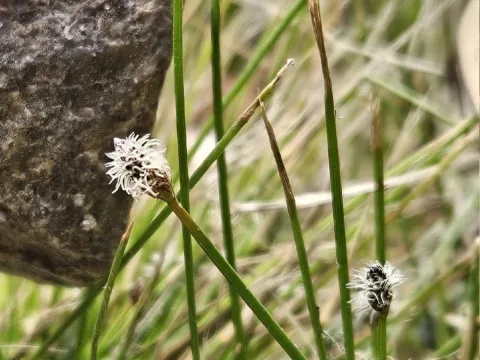
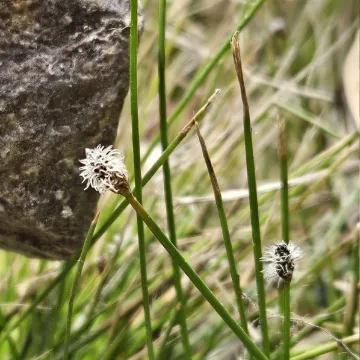
Botanically, Eleocharis montevidensis features slender, cylindrical, and erect stems that grow in dense clumps or mats. The plant reproduces mainly through spreading rhizomes, allowing it to cover large areas quickly. Its height typically ranges from 50 to 90 cm, and it produces inconspicuous terminal spikelets containing small seeds, which are less important for cultivation than its rapid vegetative spread.
Agronomic requirements are focused on moisture and light availability. The plant performs best in nutrient-rich silt or loam soils that remain consistently saturated. It is tolerant of various light conditions but thrives in full sun, which promotes denser growth and healthier color. Maintenance includes managing the spread of the rhizomes to ensure the plant remains within designated borders, as it can be quite invasive if left unchecked.
The primary agricultural and environmental uses include wetland restoration, bank stabilization to prevent soil erosion, and phytoremediation for water purification. The plant is remarkably resilient against pests and diseases; however, maintaining good water circulation is recommended to prevent stagnant-water-related pathogens. Regular monitoring is sufficient to ensure the health of the crop in both natural and controlled environments.
Photo gallery