Many-stemmed spikerush
Eleocharis multicaulis
Description
Many-stemmed spikerush (lat. Eleocharis multicaulis) is a perennial herbaceous plant belonging to the Cyperaceae family. In an agricultural and botanical context, it is recognized as a hardy wetland species that thrives in water-saturated environments and along the margins of various water bodies.
The plant originates primarily from regions in Western and Southern Europe. Its natural habitat includes marshes, peat bogs, and damp meadows. Over time, it has become an important subject for ecological engineering and controlled wetland cultivation due to its ability to colonize difficult, waterlogged substrates.
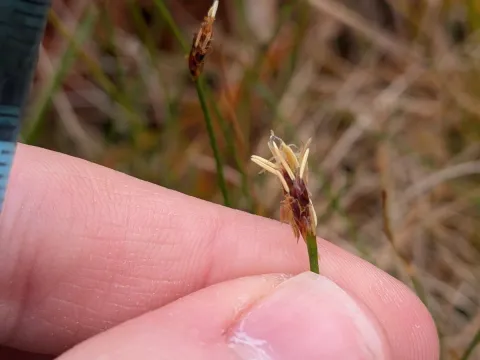
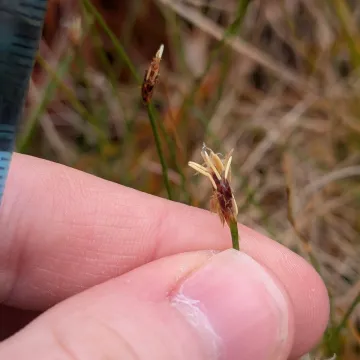
Botanically, Eleocharis multicaulis is characterized by its slender, erect stems that emerge from a creeping rhizome system. These stems reach heights of 10 to 30 centimeters and are topped by small, dense spikelets. The rhizomes are the primary mechanism for the plant's rapid vegetative expansion in its target environment.
Cultivation requires specific environmental conditions, primarily acidic or neutral peat-based soils with constant moisture. It is a light-demanding crop, though it can tolerate light shade. In agricultural settings, maintaining a consistent water level is essential, as the species is highly sensitive to desiccation, which can lead to rapid decline.
The main commercial and ecological uses involve phytoremediation and shoreline stabilization. The dense root network is highly effective at binding soil particles, preventing erosion on embankments and along the edges of ponds. Furthermore, its biological capacity to absorb nitrogen and phosphorus makes it an asset in natural wastewater treatment systems.
Regarding pests and diseases, the plant is relatively robust. However, in poorly managed environments where water circulation is stagnated, it may become susceptible to fungal infections that target the roots and lower stems. Proper site selection and ensuring fresh water flow are the primary preventative measures for maintaining crop health.
Photo gallery