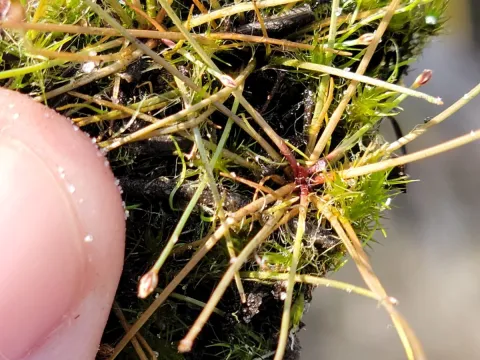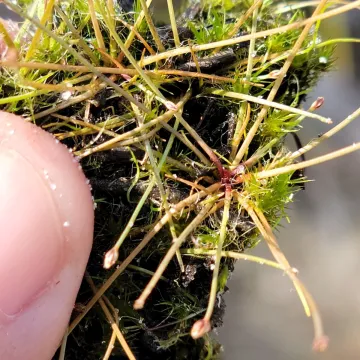
Black spikerush
Eleocharis nigrescens
Description
Black spikerush (Eleocharis nigrescens) is a perennial herbaceous plant belonging to the Cyperaceae family. It is recognized for its slender, upright, and leafless stems that thrive in aquatic and semi-aquatic environments. While not a conventional crop in large-scale agribusiness, it serves as a highly specialized plant for environmental management and ecosystem restoration.
The origin of this species is primarily linked to the tropical and subtropical regions of Africa, Asia, and the Americas. It is typically found in diverse habitats, including marshes, seasonal wetlands, and damp sandy shores. The plant is well-adapted to fluctuating water levels, which allows it to colonize areas that would be unsuitable for standard terrestrial crops.
Botanically, Eleocharis nigrescens is characterized by its compact clumping habit and its ability to spread through a robust rhizome system. The stems are photosynthetic and culminate in small, dense spikelets. This structure is highly efficient for nutrient uptake in waterlogged soils, which makes it a key species for maintaining ecological balance in specific wetlands.
The agronomic requirements for cultivating black spikerush are centered on moisture management. Unlike traditional crops, it requires saturated soil conditions to maintain optimal growth rates. Key aspects include:
- Maintaining high substrate saturation throughout the growing season.
- Selecting areas with high solar exposure to encourage density.
- Managing competitive weeds during the early establishment phase.
- Providing slightly acidic soil to promote healthy rhizome development.
Economically, the plant is valued for its role in phytoremediation and soil stabilization. It acts as a natural buffer, trapping sediments and absorbing excess nutrients from agricultural runoff, thereby protecting water quality. Regarding plant health, the species is relatively resistant to pests, though it may be susceptible to fungal pathogens if water circulation is poor or if the plant is subjected to significant temperature fluctuations that lead to stress.
Photo gallery