
Blunt spikerush
Eleocharis obtusa
Description
Blunt spikerush (Eleocharis obtusa) is an annual herbaceous plant species within the Cyperaceae family. It is recognized as a typical hydrophyte, adapted for growth in saturated substrates or shallow waters, often forming dense, grass-like tufts that contribute to the integrity of wetland ecosystems.
Native to North America, the plant is found extensively throughout the United States and Canada. Its natural distribution includes muddy shores, ditches, and ephemeral wetlands. In modern land management, it is valued for its resilience and effectiveness in colonizing bare, moist soils after disturbances.
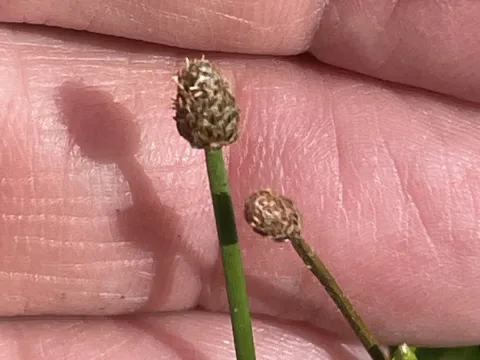
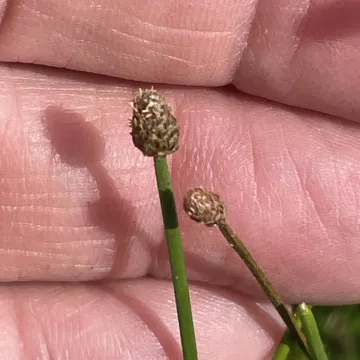
Botanically, the plant is characterized by tufted, leafless stems reaching heights of up to 40 centimeters, topped by blunt, egg-shaped spikelets. Its root system is fibrous and shallow, allowing it to thrive in nutrient-rich organic soils or heavy clays, provided moisture is consistently available throughout the vegetative cycle.
Cultivation requirements for this species focus primarily on hydrology and light. It thrives in full sun exposure and is highly dependent on high water tables or direct immersion. Unlike many terrestrial crops, it does not require complex fertilization if the organic content of the substrate is sufficient, but it does require protection from invasive aggressive hydrophytes.
- Adaptation to saturated soil conditions
- Contribution to soil erosion control
- Natural filtering capacity for water systems
- Low maintenance in suitable habitats
The primary economic and environmental applications of blunt spikerush include shoreline restoration, artificial wetland construction, and bioremediation projects intended to process agricultural or industrial run-off. While generally robust, the plant can be susceptible to fungal pathogens in stagnant, uncirculated water, and it can be outcompeted if the water depth exceeds its optimal physiological range.
Photo gallery