Ochre spike-rush
Eleocharis ochreata
Description
Ochre spike-rush (Eleocharis ochreata) is a perennial herbaceous plant belonging to the Cyperaceae family. In agronomy and environmental engineering, it is recognized for its adaptability to wetland ecosystems and its specialized role in water-saturated environments.
The species is native to the tropical and subtropical regions of the Americas. Its natural habitat includes marshes, wet meadows, and the margins of water bodies. The plant is well-adapted to anaerobic soil conditions and plays a vital role in maintaining the structural integrity of riparian zones through its extensive root system.
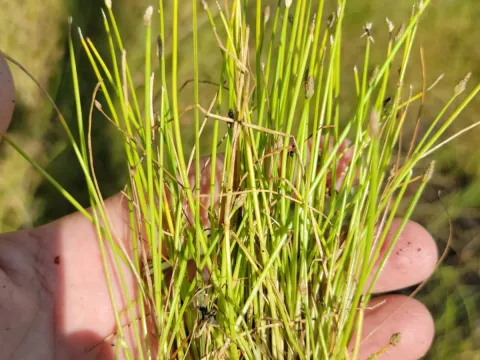
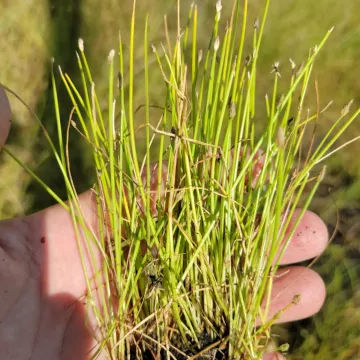
Botanically, the plant is characterized by slender, erect stems that emerge from perennial rhizomes. The stems are typically round and smooth, terminating in small, ochre-colored spikelets. This morphology allows the plant to thrive in dense clusters, effectively covering the ground and providing habitat for small aquatic organisms.
Cultivation requirements for this species focus on hydrology and light. It thrives in soils that remain consistently moist or saturated, such as silt or muck soils with high organic content. While it prefers full sunlight, it can tolerate partial shade, provided the moisture levels are not compromised by rapid evaporation.
Economically, Ochre spike-rush is utilized primarily in landscape architecture and ecological restoration projects. Its ability to absorb excess nutrients, such as nitrogen and phosphorus from water, makes it an excellent candidate for phytoremediation in artificial wetlands and bioretention cells. Common issues include sensitivity to prolonged drought and potential competition from invasive aquatic weeds if the initial planting density is insufficient.
Photo gallery